
VistaShares Artificial Intelligence
Supercycle® ETF
The AI Infrastructure ETF
AIS at a glance
AIS is the VistaShares Artificial Intelligence Supercycle® ETF, an AI infrastructure ETF that invests in global companies involved in AI semiconductors, data centers and AI-enabled applications. It seeks long term capital appreciation by actively investing in AI companies that derive their revenues from producing high-performance semiconductors, and from building and operating AI-enabled applications and data centers. AIS trades on the New York Stock Exchange (NYSE).
- Expense ratio
- 0.75% Per prospectus
- Net assets
- $631.6M As of November 20, 2026
- Equity holdings
- 57 As of November 20, 2026
- Top 10 weight
- 44.3% As of November 20, 2026
- Distributions
- Annually Not guaranteed
- Inception
- December 3, 2024
- Exchange
- NYSE Ticker AIS
- Strategy
- Thematic equity Actively managed
Largest holdings
| Holding | Ticker | Weight |
|---|---|---|
| SK hynix Inc | 000660 KS | 8.18% |
| Micron Technology Inc | MU | 6.74% |
| Advanced Micro Devices Inc | AMD | 6.70% |
| Taiwan Semiconductor Manufacturing Co Ltd | TSM | 4.25% |
| Semtech Corp | SMTC | 3.55% |
Research and guides
Bill of Materials Approach
HoverPress to explore
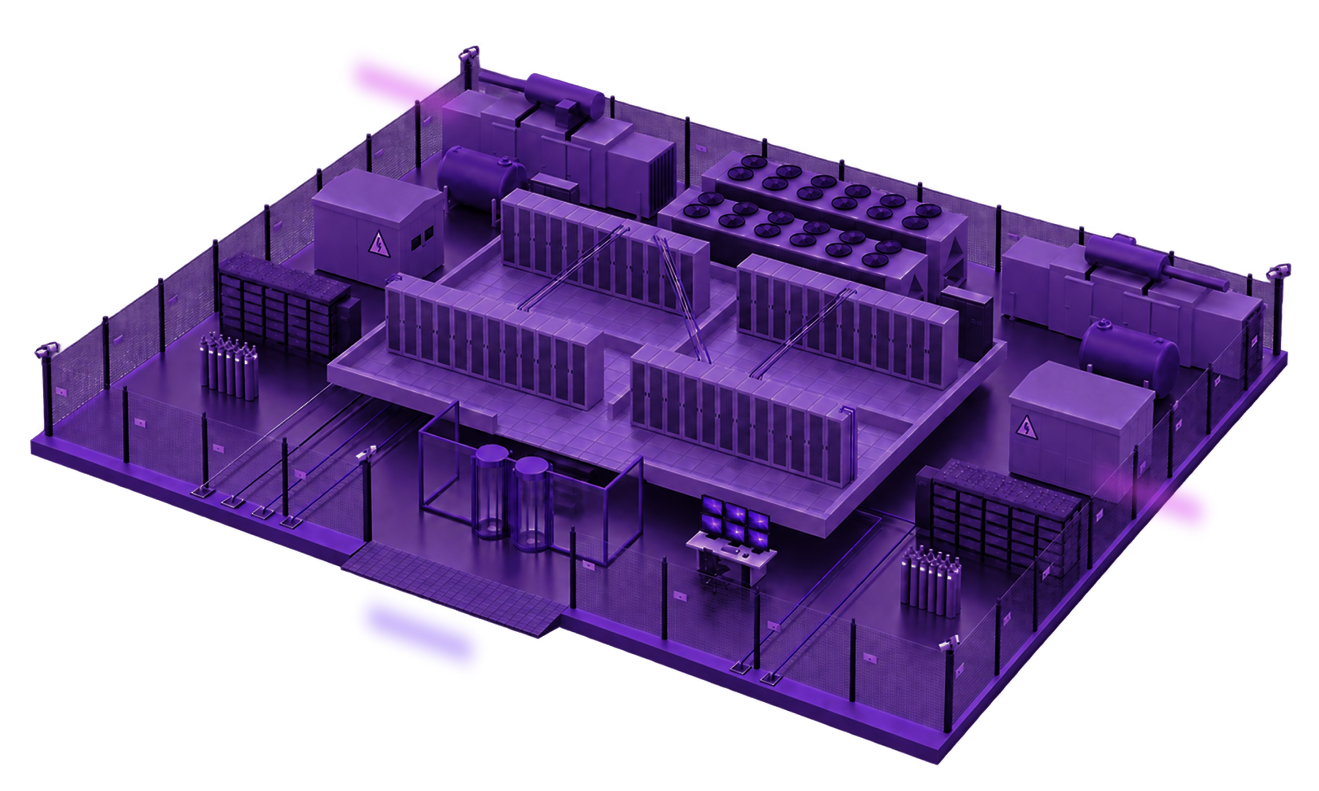
Weights are illustrative and may change.
Our Methodology
We map the components, equipment, infrastructure, and technologies required for an investment theme to scale, then identify the companies supplying each piece.
Instead of weighting by market cap, we weight by the role each part of the buildout plays. The result is exposure designed to follow where industry CAPEX is going, not simply where market value already sits.
Prices & Performance
ETF Prices
as of November 20, 2026
NAV
45.03
Daily Change
-5.06-10.10%
Market Price
43.66
Daily Change
-5.57-11.31%
| Performance History as of October 31, 2026 | Since Inception | 1M | 3M | YTD | 1Y |
|---|---|---|---|---|---|
| NAV | 140.26% | -19.67% | -6.96% | 59.12% | 50.1% |
| Market Price | 138.32% | -20.26% | -6.5% | 57.74% | 48.58% |
Performance History
as of October 31, 2026
| Quarter End as of March 31, 2026 | Since Inception | 1M | 3M | YTD | 1Y |
|---|---|---|---|---|---|
| NAV | 65.44% | -9.27% | 9.57% | 9.57% | 92.89% |
| Market Price | 67.64% | -8.03% | 10.96% | 10.96% | 94.59% |
Quarter End
as of March 31, 2026
Performance data quoted represents past performance; past performance does not guarantee future results. The investment return and principal value of an investment will fluctuate so that an investor’s shares, when redeemed, may be worth more or less than their original cost. Current performance of the fund may be lower or higher than the performance quoted. Performance current to the most recent month-end can be obtained by calling (844) 875-2288.
Short term performance, in particular, is not a good indication of the fund’s future performance, and an investment should not be made based solely on returns. Returns beyond 1 year are annualized. A fund’s NAV is the sum of all its assets less any liabilities, divided by the number of shares outstanding. The market price is the most recent price at which the fund was traded. The fund intends to pay out dividends and interest income, if any, monthly. There is no guarantee these distributions will be made.
Holdings & Characteristics
| Top 10 Holdings as of November 20, 2026 | Ticker | Market Value | Weightings |
|---|---|---|---|
| SK hynix Inc | 000660 KS | $51,679,283.79 | 8.18% |
| Micron Technology Inc | MU | $42,582,373.26 | 6.74% |
| Advanced Micro Devices Inc | AMD | $42,299,375.69 | 6.70% |
| Taiwan Semiconductor Manufacturing Co Ltd | TSM | $26,849,723.95 | 4.25% |
| Semtech Corp | SMTC | $22,401,470.31 | 3.55% |
| Vertiv Holdings Co | VRT | $21,676,864.80 | 3.43% |
| MARVELL TECHNOLOGY INC | MRVL | $20,308,873.80 | 3.22% |
| GE Vernova Inc | GEV | $19,549,770.15 | 3.10% |
| Arista Networks Inc | ANET | $16,591,530.46 | 2.63% |
| Foxconn Industrial Internet Co Ltd | 601138 C1 | $16,004,726.20 | 2.53% |
| Intel Corp | INTC | $15,961,617.92 | 2.53% |
| Samsung Electronics Co Ltd | 005930 KS | $15,668,054.18 | 2.48% |
| Legrand SA | LR FP | $14,953,206.67 | 2.37% |
| ASML Holding NV | ASML | $14,352,603.70 | 2.27% |
| Silicon Motion Technology Corp | SIMO | $13,817,722.82 | 2.19% |
| Seagate Technology Holdings PLC | STX | $13,169,657.17 | 2.09% |
| Corning Inc | GLW | $12,650,034.54 | 2.00% |
| Asustek Computer Inc | 2357 TT | $12,524,898.61 | 1.98% |
| Nokia Oyj | NOKIA FH | $12,263,699.02 | 1.94% |
| Tower Semiconductor Ltd | TSEM IT | $11,718,213.17 | 1.86% |
| NVIDIA Corp | NVDA | $11,586,921.12 | 1.83% |
| Vicor Corp | VICR | $11,290,123.04 | 1.79% |
| Astera Labs Inc | ALAB | $10,614,679.60 | 1.68% |
| ARM Holdings PLC | ARM | $9,556,333.60 | 1.51% |
| AIXTRON SE | AIXA GR | $9,042,964.99 | 1.43% |
| MPI Corp | 6223 TT | $8,977,536.81 | 1.42% |
| Navitas Semiconductor Corp | NVTS | $8,481,770.24 | 1.34% |
| Unimicron Technology Corp | 3037 TT | $8,193,160.15 | 1.30% |
| MediaTek Inc | 2454 TT | $8,074,640.29 | 1.28% |
| Samsung Electro-Mechanics Co Ltd | 009150 KS | $7,402,873.82 | 1.17% |
| Nanya Technology Corp | 2408 TT | $7,205,027.32 | 1.14% |
| Sandisk Corp | SNDK | $6,836,193.28 | 1.08% |
| Montage Technology Co Ltd | 688008 C1 | $6,756,479.77 | 1.07% |
| Western Digital Corp | WDC | $6,683,371.56 | 1.06% |
| Penguin Solutions Inc | PENG | $6,464,305.75 | 1.02% |
| Broadcom Inc | AVGO | $5,963,696.31 | 0.94% |
| Coherent Corp | COHR | $5,395,680.40 | 0.85% |
| Cisco Systems Inc | CSCO | $5,326,640.88 | 0.84% |
| Advanced Energy Industries Inc | AEIS | $5,119,614.72 | 0.81% |
| Nutanix Inc | NTNX | $4,992,523.38 | 0.79% |
| Hewlett Packard Enterprise Co | HPE | $4,878,762.96 | 0.77% |
| Infineon Technologies AG | IFNNY | $4,798,755.00 | 0.76% |
| Credo Technology Group Holding Ltd | CRDO | $4,762,822.70 | 0.75% |
| IEIT Systems Co Ltd | 000977 C2 | $4,694,892.19 | 0.74% |
| SIMMTECH Co Ltd | 222800 KS | $4,312,573.42 | 0.68% |
| AP Memory Technology Corp | 6531 TT | $4,093,221.14 | 0.65% |
| Quanta Computer Inc | 2382 TT | $3,968,414.46 | 0.63% |
| Hygon Information Technology Co Ltd | 688041 C1 | $3,923,010.31 | 0.62% |
| Transcend Information Inc | 2451 TT | $3,700,502.68 | 0.59% |
| Super Micro Computer Inc | SMCI | $3,584,157.50 | 0.57% |
| Munters Group AB | MTRS SS | $3,467,031.48 | 0.55% |
| Rigaku Holdings Corp | 268A JP | $3,222,354.32 | 0.51% |
| Celestica Inc | CLS CN | $2,905,637.98 | 0.46% |
| First American Government Obligations Fund 12/01/2031 | FGXXX | $2,083,543.95 | 0.33% |
| Ajinomoto Co Inc | 2802 JP | $2,079,451.21 | 0.33% |
| Lumentum Holdings Inc | LITE | $1,332,802.76 | 0.21% |
| Cerebras Systems Inc | CBRS | $1,050,322.35 | 0.17% |
| Vistance Networks Inc | VISN | $814,488.94 | 0.13% |
| NEW TAIWAN DOLLAR | TWD | $647,944.19 | 0.10% |
| Cash & Other | Cash&Other | $241,436.07 | 0.04% |
Holdings are subject to change.
Exposure
- United States 59.60%
- Taiwan 15.30%
- China 9.65%
- Israel 0.65%
- United Kingdom 1.21%
- France 3.19%
- South Korea 5.56%
- Sweden 0.91%
- Japan 0.22%
- Australia 2.31%
- Canada 0.67%
- Finland 0.71%
- Information Technology 88.46%
- Industrials 11.54%
- Semiconductors & Semiconductor Equipment 48.73%
- Technology Hardware, Storage and Peripherals 12.18%
- Communications Equipment 7.91%
- Software 8.35%
- Electronic Equipment, Instruments and Components 8.77%
- Electrical Equipment 10.42%
- IT Services 2.52%
- Building Products 0.91%
- Trading Companies & Distributors 0.21%
- Large Cap 75.05%
- Mid Cap 17.73%
- Small Cap 7.22%
ETF Documents
FAQs
What is AIS?
AIS is the VistaShares Artificial Intelligence Supercycle® ETF, an AI infrastructure ETF that invests in global companies involved in AI semiconductors, data centers and AI-enabled applications. It seeks long term capital appreciation by actively investing in AI companies that derive their revenues from producing high-performance semiconductors, and from building and operating AI-enabled applications and data centers. AIS trades on the New York Stock Exchange (NYSE).
Is AIS a stock or an ETF?
AIS is an exchange-traded fund (ETF), not a single company’s stock. One AIS share represents an interest in a portfolio of 65 to 75 global AI companies. Its shares trade on the NYSE during market hours like a stock, under the ticker AIS.
Is there an AI infrastructure ETF?
Yes. AIS is positioned as an AI infrastructure ETF: its investment focus is the infrastructure that supports AI development and use, meaning the chips (GPUs, memory and data processing units), the data centers that house them, and the applications that run on them. It trades on the NYSE under the ticker AIS. See our guide to the AI supply chain.
Is there an AI ETF?
Yes. AIS, the VistaShares Artificial Intelligence Supercycle® ETF, is an AI ETF holding 65 to 75 global companies involved in AI semiconductors, data centers and AI-enabled applications. It seeks long term capital appreciation. Other AI ETFs take different approaches, so compare objectives, holdings, fees and risks with a financial advisor.
Is there a data center ETF?
AIS is not a data center REIT or a fund limited to data center owners, but AI data centers are one of the three areas in its mandate. Under normal circumstances AIS invests at least 80% of its net assets in AI companies, meaning companies involved in AI semiconductors, AI data centers and AI-enabled applications. That includes companies that make the chips data centers run on and companies involved in building and operating AI data centers. The full holdings list, updated daily, is on this page.
How can I invest in AI data centers?
There are several routes. Data center REITs own and lease the buildings. Individual stocks give exposure to single chip, networking, power or cooling suppliers. ETFs hold a basket of these companies in one trade. AIS is one ETF option: it invests in global companies involved in AI semiconductors, AI data centers and AI-enabled applications. Each route carries different risks, including concentration in a small number of large companies, and an ETF’s holdings and weightings change over time.
What is AI capex?
AI capex is capital expenditure on artificial intelligence infrastructure: the money companies spend on AI chips, servers, data center buildings, networking equipment and the power and cooling that run them. Most of it comes from large cloud and internet companies, often called hyperscalers. AI capex matters for AIS because the companies in its mandate, across AI semiconductors, AI data centers and AI-enabled applications, supply much of what that spending buys. Spending levels can change quickly with company plans and the economy.
What does AIS hold?
AIS holds stocks of global companies involved in high-performance semiconductors used for AI, AI data centers and AI-enabled applications, selected through VistaShares’ Bill of Materials process. It may also hold depositary receipts and cash or cash equivalents. The full holdings list is on the AIS fund page and is updated daily.
Does AIS invest only in AI companies?
Under normal circumstances, AIS invests at least 80% of its net assets (plus borrowings for investment purposes) in AI companies, meaning companies involved in AI semiconductors, AI data centers and AI-enabled applications. It may invest up to 20% in companies that VistaShares considers emerging AI companies, judged by public business plans, capital spending, research and development, and acquisitions. That 20% may also be held in cash or cash equivalents, including money market funds.
What kinds of companies does AIS not include?
AIS focuses on companies involved in AI semiconductors, AI data centers and AI-enabled applications. A company that simply uses AI in an otherwise unrelated business is generally outside that focus, and AIS does not hold private companies. The exception is the up to 20% the fund may hold in emerging AI companies or cash.
Who manages AIS?
AIS’s investment adviser is VistaShares Advisors LLC, and the portfolio is run by the VistaShares Investment Committee. The committee applies the fund’s Bill of Materials process across AI semiconductors, data centers and applications and reviews the portfolio between its June and December rebalances. Information about the firm and its team is on the About VistaShares page.
Who oversees the management of VistaShares ETFs?
The VistaShares Investment Committee oversees and manages all VistaShares ETFs, combining investment professionals and scholars with advisors who have operated businesses in the industries the funds cover. For AIS, that includes experience in AI computing and chip supply chains. More about the committee is on the About VistaShares page.
How does AIS work?
AIS maps the AI supply chain, from chips to data centers to applications, using VistaShares’ Bill of Materials process, then selects and weights the companies contributing to each step. The portfolio focuses on companies involved in AI semiconductors, AI data centers and AI-enabled applications. The portfolio is rebalanced each June and December, and the Investment Committee may add or remove companies in between.
Is AIS an index fund?
No. AIS is an actively managed ETF. It follows a rules-based methodology, set out in its rule book, for identifying AI companies and weighting them through the Bill of Materials process, and the Investment Committee may add or remove companies between rebalance dates. Up to 20% of net assets may be invested in emerging AI companies or in cash and cash equivalents.
How are VistaShares ETFs managed?
VistaShares ETFs are actively managed and follow a researched, rules-based methodology designed to provide exposure to the theme an investor is seeking. In AIS, that methodology maps the AI supply chain from high-performance semiconductors to the data centers and applications built on them.
What is the active "risk management overlay"?
In AIS, the risk management overlay is the Investment Committee’s monitoring of companies across the AI supply chain, from semiconductors to data centers and applications, between the June and December rebalances. If the committee considers it necessary, it may add or remove companies before the next rebalance date. The overlay is designed to let the portfolio respond to changes in a fast-moving industry; it does not eliminate risk.
What are supercycles?
Supercycles are long-term trends in which technological advances disrupt existing economic models. VistaShares builds each Supercycle® ETF around one such trend; AIS is built around artificial intelligence and the infrastructure that supports its development and use. See our guide to what a supercycle is in investing.
What is the AI supercycle?
The AI supercycle is VistaShares’ term for the long-term trend of artificial intelligence development and adoption, and the infrastructure investment it requires. VistaShares calls it a supercycle because it views AI as a technological advance that is disrupting existing economic models. AIS seeks to invest across that supply chain: high-performance semiconductors, AI data centers and AI-enabled applications.
How does VistaShares analyze target industries?
VistaShares analyzes each target industry’s supply chain to identify the companies and profit pools in each sub-industry segment that have significant economic exposure to the theme. For AIS, the segments run from GPU, memory and data processing chips through the data centers that house them to the applications built on them.
What is the "Bill of Materials" process?
The Bill of Materials process is how VistaShares identifies and weights the companies contributing to each step in the production process that leads to a final product. For AIS, the final product is AI in use, so the process works back through the applications, the data centers they run in, and the semiconductors inside those data centers.
What sections are included in the AI Supercycle Bill of Materials?
The AI Supercycle Bill of Materials begins with high-performance semiconductors: graphics processing units (GPUs), video memory (VRAM) and data processing units (DPUs). The fund’s mandate also covers AI data centers and AI-enabled applications.
What GPU companies are in AIS's Bill of Materials?
The GPU section covers companies that design and produce graphics processing units optimized for AI processing, machine learning and high-performance computing. It includes research and development of advanced architectures, fabrication of semiconductor wafers and assembly of GPU units, with a focus on computational power, energy efficiency and the parallel processing AI requires. Specific holdings are listed on the fund page.
What is the video memory (VRAM) section of AIS?
The VRAM section covers companies that develop and manufacture high-capacity video memory that supports GPUs in handling large datasets and complex computations. It includes advances in memory technology that improve bandwidth, latency and overall performance for AI and other data-intensive applications.
What is a data processing unit (DPU), and why does AIS include DPU makers?
A data processing unit is a chip designed to offload data-intensive tasks from the CPU, such as network traffic management, security processing and data storage management, so the system runs more efficiently. AIS’s Bill of Materials includes companies developing DPUs because they are part of the computing hardware that AI workloads depend on.
What are AI-enabled applications in AIS?
AI-enabled applications are software products and services built on AI. AIS’s objective includes global AI companies that build and operate AI-enabled applications, alongside semiconductor makers and data center companies.
How many holdings does the portfolio hold at any time?
AIS holds 65 to 75 individual companies. The full list, updated daily, is on the fund page.
How often is the portfolio rebalanced?
AIS is rebalanced semi-annually, in June and December. Between rebalances, the Investment Committee may add or remove companies through its risk management overlay, for example if a company’s business moves away from the AI supply chain.
The infrastructure behind an AI investment supercycle
Training AI models and running them in applications require computing power, memory, networking and data centers equipped to manage demanding workloads. We believe expanding AI use could support a multiyear investment cycle across this infrastructure.
That investment extends from advanced processors and high-bandwidth memory to optical connections, server systems, cooling and power management. The scale and timing of spending will depend on customer demand, computing efficiency and the economics of AI deployment.
The VistaShares Artificial Intelligence Supercycle® ETF (AIS) invests in global companies involved in AI semiconductors, data centers and AI-enabled applications, with an investment focus on the infrastructure supporting AI development and use.
The components that make AI possible
An AI system depends on technologies that process information, move data, supply electricity and remove heat. Each performs a different role in the system’s capacity and performance.
AIS uses our Bill of Materials approach to examine these requirements and identify companies supplying the underlying technologies. This analysis helps inform portfolio construction across the AI supply chain.
Rapid technological change, competition and shifts in customer capital spending can adversely affect these companies, even if AI adoption continues.

ETF Objective
The VistaShares Artificial Intelligence Supercycle® ETF seeks long term capital appreciation by actively investing in a portfolio of global AI companies that derive their revenues from producing high-performance semiconductors, and building and operating AI-enabled applications and datacenters.
Managed with domain expertise

Sundeep “Sunny” Madra
Advisor to Investment Committee

Jon McNeill
Co-Founder

Justin Lopas
Advisor to Investment Committee

Robert Whitelaw
Chief Investment Strategist

Adam Patti
Chief Executive Officer

David Fetherstonhaugh
Chief Investment Officer
Sundeep “Sunny” Madra
Advisor to Investment Committee
Sundeep “Sunny” Madra is a recognized thought leader in the Artificial Intelligence space known for his deep expertise in AI, machine learning, and large-scale computing systems.
A seasoned entrepreneur, Sunny has an impressive track record of founding and successfully exiting multiple startups. His latest venture, Definitive Intelligence, was acquired by Groq — a cutting-edge computing company known for creating the fastest chip for LLM (Large Language Model) inference, enabling real-time chatbot responses with proprietary Language Processing Units (LPUs) — in early 2024. Following the acquisition, Sunny played a key role in launching GroqCloud and currently serves as the President of Supply Chain, Operations, and Go-to-Market at Groq.
Sunny’s other business ventures include co-founding and serving as CEO of Autonomic, a technology company focused on building infrastructure for smart mobility applications, which was later acquired by Ford. Prior to that, he co-founded and served as CTO of Xtreme Labs, a mobile app development company for leading brands, which was acquired by Pivotal.
In addition to his entrepreneurial ventures, Sunny held leadership roles at Ford, where he served as Vice President of Ford X, overseeing the automaker’s technology-focused initiatives.
Alongside his successful entrepreneurial career, Sunny has been an active angel investor since 2013. His extensive experience in technology, combined with deep expertise in AI, positions him as a key contributing member of the VistaShares investment committee.
Jon McNeill
Co-Founder

Jon currently serves as the CEO and Co-Founder of the venture studio, DVx Ventures. With a track record of founding and scaling six companies, Jon has led teams that generated tens of thousands of jobs and delivered multi-billion dollar returns for investors. At DVx, Jon and his team have launched 13 companies that are attacking broad opportunities in large markets.
Previously, Jon served as President at Tesla, where revenue grew from $2B to $20B in just 30 months. Subsequently, Jon joined Lyft as COO, where he played a pivotal role in doubling revenues and helping to take the company public. With a history as a six-time serial entrepreneur creating unicorns, Jon has a wealth of experience in operating and scaling companies during periods of hyper-growth in revenue and operations and has delivered returns of 9x to investors.
Jon currently holds advisory partner positions at Advent International and Goodwater Capital, serves as Vice Chair of the board of directors of Cruise, and is a board member for General Motors, Asurion, CrossFit, Stash, and Lululemon. During his tenure on the board of Lululemon, the company underwent a turnaround, resulting in a quintupling of its stock value.
Jon is a sought-after speaker, and frequently lectures at Harvard Business School and MIT Sloan School of Management. He graduated from Northwestern University before beginning his career at Bain & Company.
Justin Lopas
Advisor to Investment Committee
Justin Lopas is the Co-Founder and Chief Operating Officer of Base Power, an energy technology company based in Austin, Texas, focused on modernizing and decentralizing the electrical grid through home battery systems. Before founding Base Power in 2023, he led manufacturing at Anduril Industries and worked at SpaceX, where he played a key role in building the Starship program and establishing the Starbase site in Texas.
At Anduril, he managed a team of over 150 people overseeing manufacturing, operations, and supply chain for advanced defense systems. Known for his precision-building mindset learned at SpaceX, Lopas now applies those principles to scalable energy infrastructure, helping transform battery storage into intelligent grid technology.
A graduate of the University of Michigan with a degree in mechanical engineering, Lopas has also held positions at Apple and Baker Hughes.
Robert Whitelaw
Chief Investment Strategist
Robert F. Whitelaw was most recently the Dean of the Undergraduate College, and continues to serve, as the Edward C. Johnson 3d Professor of Entrepreneurial Finance at the Leonard N. Stern School of Business, New York University.
Professor Whitelaw is best known for his comprehensive research on empirical asset pricing, including the resolution of the market-level risk-return puzzle, the role of information processing in explaining excess volatility, and the impact of frictions in generating apparent market inefficiency. His research also addresses the pricing and hedging of fixed income securities, and risk measurement and management.
His papers have been published in academic journals such as the Journal of Finance, the Journal of Financial Economics, and the Review of Financial Studies, as well as practitioner journals such as the Journal of Derivatives, the Journal of Fixed Income, Risk, and the Financial Analysts Journal. His research has received awards from organizations including Goldman Sachs Asset Management and the Chicago Quantitative Alliance. In addition, he is a Research Associate at the National Bureau of Economic Research (NBER), Program on Asset Pricing, and a past Associate Editor of the Review of Financial Studies and the Journal of Finance.
He has a PhD in Finance from Stanford University, Graduate School of Business and a BS in Mathematics from MIT. Professor Whitelaw teaches portfolio management, investments/capital markets and international finance in the MBA, undergraduate and executive programs and asset pricing at the doctoral level.
Adam Patti
Chief Executive Officer
Adam is a pioneer in the Exchange-Traded Funds industry. Prior to VistaShares, Adam founded IndexIQ with a vision to combine institutional quality alternative investment strategies with the power of ETFs to enhance portfolio construction for all investors. IndexIQ established itself as the leading alternative investment manager in the ETF industry and was acquired by New York Life Insurance Company in 2015.
As Chairman & CEO of IndexIQ, Adam was an architect behind IndexIQ’s award winning product line of alternative investment strategies, and post-acquisition worked to successfully integrate the firm into the New York Life Investments infrastructure, including the roll-out of IndexIQ branded ETFs globally.
Prior to founding IndexIQ, Adam held a series of senior executive roles at TimeWarner, including at Fortune Magazine where he led Fortune Indexes, the creator of the first smart beta index. Fortune Indexes was an early entrant into the ETF industry, having launched the Fortune 500 ETF in partnership with State Street Global Advisors back in 2000.
Adam is frequently featured in the media and has won numerous awards as an expert in ETFs and alternative investments. He holds an MBA from Northwestern University – Kellogg School of Management with a triple major in Finance, Marketing and Entrepreneurship, and a B.S. in Finance from University at Albany.
David Fetherstonhaugh
Chief Investment Officer
David Fetherstonhaugh is the Chief Investment Officer overseeing both public and private markets. His investment approach draws on extensive experience in growth technology investing, with a particular focus on the companies and critical supply chains underpinning artificial intelligence, electrification, and other major technology shifts.
David is also a Partner at DVx Ventures, where he leads the firm’s investment strategy and diligence across new ventures and private investments. Previously, he was a member of the investment team at Mithril Capital Management, the growth technology investment firm co-founded by Peter Thiel. At Mithril, he evaluated investments across sectors and stages, supported portfolio companies including Palantir, Auris, and BlackSky on financing and M&A, and contributed to investments in GreyOrange and Oklo.
David is a frequent commentator on technology and financial markets, with appearances on Bloomberg, Schwab, and industry podcasts. His perspectives have been featured in CNN, Axios, Barron’s, MarketWatch, and other leading publications.
David began his career in investment banking at BMO Capital Markets and graduated from McGill University.
- Inception Date
- December 3, 2024
- Expense Ratio
- 0.75%
- Net Assets
- $631,550,178.38
- Fact Sheet
- AIS Fact Sheet
- Ticker
- AIS
- Bloomberg Index Ticker
- BVSAIS
- CUSIP
- 45259A845
- Primary Exchange
- NYSE
- Shares Outstanding
- 14,025,000
- Total positions (incl. options and cash)
- 64
- Premium/Discount
- -3.04%
- 30-Day Median Bid-Ask Spread
- 0.21%
- 30-Day SEC Yield
- -0.28%
- Distribution Frequency
- Annually
The 30-Day SEC Yield represents net investment income earned by the Fund over the 30-day period ended on the date indicated by the Yield, expressed as an annual percentage rate based on the Fund’s share price at the end of the 30-day period. The unsubsidized 30-Day SEC Yield does not reflect any fee waivers/reimbursements/limits in effect.
ANNUAL DISTRIBUTION: Declaration Date 12/26/2025 | Ex-Div Date 12/29/2025 | Record Date 12/29/2025 | Payable Date 12/30/2025 | Distribution Amount: $0.00

Harness the power of Pure Exposure™
As of November 20, 2026, AIS, the VistaShares Artificial Intelligence Supercycle® ETF, is an actively managed AI infrastructure ETF with 64 holdings, investing in global companies across AI semiconductors, data centers and AI-enabled applications.
Fund Specific Disclosure
Important Information:
VistaShares Artificial Intelligence Supercycle® ETF (AIS)
Pure Exposure: The Index is a rules-based composite index that tracks the market performance of companies, listed on global stock exchanges, that derive their revenues from producing high-performance AI semiconductors, infrastructure, and building and operating AI-enabled applications and datacenters.
High Beta: Refers to a security or portfolio that is more volatile than the overall market.
Under normal circumstances, the Fund will invest at least 80% of the Fund’s net assets (plus borrowings for investment purposes) in AI companies. The Fund may invest up to 20% of its net assets in companies that are not included in the 80% test noted above. These investments can include equity securities and depositary receipts of issuers that are not Index constituents but that the Sub-Adviser would characterize as emerging AI companies, based on the Sub-Adviser’s analysis of publicly available business plans and as may be further evidenced by capital expenditures, research and development efforts and business acquisitions. This 20% of the Fund’s portfolio may also be invested in cash or cash equivalents (including money market funds).
Artificial Intelligence Risk: Issuers engaged in artificial intelligence typically have high research and capital expenditures and, as a result, their profitability can vary widely, if they are profitable at all. The space in which they are engaged is highly competitive and issuers’ products and services may become obsolete very quickly. These companies are heavily dependent on intellectual property rights and may be adversely affected by loss or impairment of those rights. The issuers of this AI infrastructure ETF are also subject to legal, regulatory and political changes that may have a large impact on their profitability. A failure in an issuer’s product or even questions about the safety of the product could be devastating to the issuer, especially if it is the marquee product of the issuer. It can be difficult to accurately capture what qualifies as an artificial intelligence company.
Equity Market Risk: Common stocks are generally exposed to greater risk than other types of securities, such as preferred stock and debt obligations, because common stockholders generally have inferior rights to receive payment from specific issuers.
Technology Sector Risks: The Fund will invest substantially in companies in the technology sector, and therefore the performance of the Fund could be negatively impacted by events affecting this sector. Market or economic factors impacting technology companies and companies that rely heavily on technological advances could have a significant effect on the value of the Fund’s investments.
Foreign Securities Risk: Investments in securities or other instruments of non-U.S. issuers involve certain risks not involved in domestic investments and may experience more rapid and extreme changes in value than investments in securities of U.S. companies. Financial markets in foreign countries often are not as developed, efficient, or liquid as financial markets in the United States, and therefore, the prices of non-U.S. securities and instruments can be more volatile
Index Strategy Risk: The Fund’s strategy is linked to an Index maintained by the Index Provider that exercises complete control over the Index. The Index Provider may delay or add a rebalance date, which may adversely impact the performance of the Fund and its correlation to the Index. In addition, there is no guarantee that the methodology used by the Index Provider to identify constituents for the Index will achieve its intended result or positive performance. Errors in Index data, Index computations or the construction of the Index in accordance with its methodology may occur from time to time and may not be identified and/or corrected for a period of time or at all, which may have an adverse impact on the Fund.
Swap Agreements Risk: Swap agreements are entered into primarily with major global financial institutions for a specified period which may range from one day to more than one year. In a standard swap transaction, two parties agree to exchange the return (or differentials in rates of return) earned or realized on particular predetermined reference or underlying securities or instruments.
New Sub-Adviser Risk: The Sub-Adviser is a newly formed entity and has no experience with managing an exchange-traded fund, which may limit the Sub-Adviser’s effectiveness.
The Sub-Adviser defines an “AI company” as a company that, based upon publicly available revenue data derives at least 50% of their revenues from or have at least 50% of their assets invested in or have the potential to generate 50% of their revenues from or have at least 50% of their assets devoted to the production, development and/or operation of (i) high-performance semiconductors used for AI (artificial intelligence) related hardware & software, (ii) AI related datacenters, and/or (iii) AI enabled applications.
The Sub-Adviser defines “supercycles” as long-term trends that disrupt current economic models through disruptive technological advancements shaping our world. The Fund’s portfolio is expected to consist of all or a representative sample of the securities in the BITA VistaShares Artificial Intelligence Supercycle Index (the “Index”).
The BITA VistaShares Artificial Intelligence Supercycle Index is a rules-based composite index that tracks the market performance of companies, listed on global stock exchanges, that derive their revenues from producing high-performance semiconductors, and building and operating AI-enabled applications and datacenters.
Active Share. Active Share is a measure of how much a portfolio’s holdings differ from its benchmark index.
Basis Point. A basis point is a unit of measure used in finance to describe percentage changes or differences in interest rates, bond yields, or other percentages.
Alpha: Measures the excess return or “outperformance” of an investment. Measures the excess return or “outperformance” of an investment.
 English
 한국어