13 Nov 2026
How Do Buffer ETFs Work?
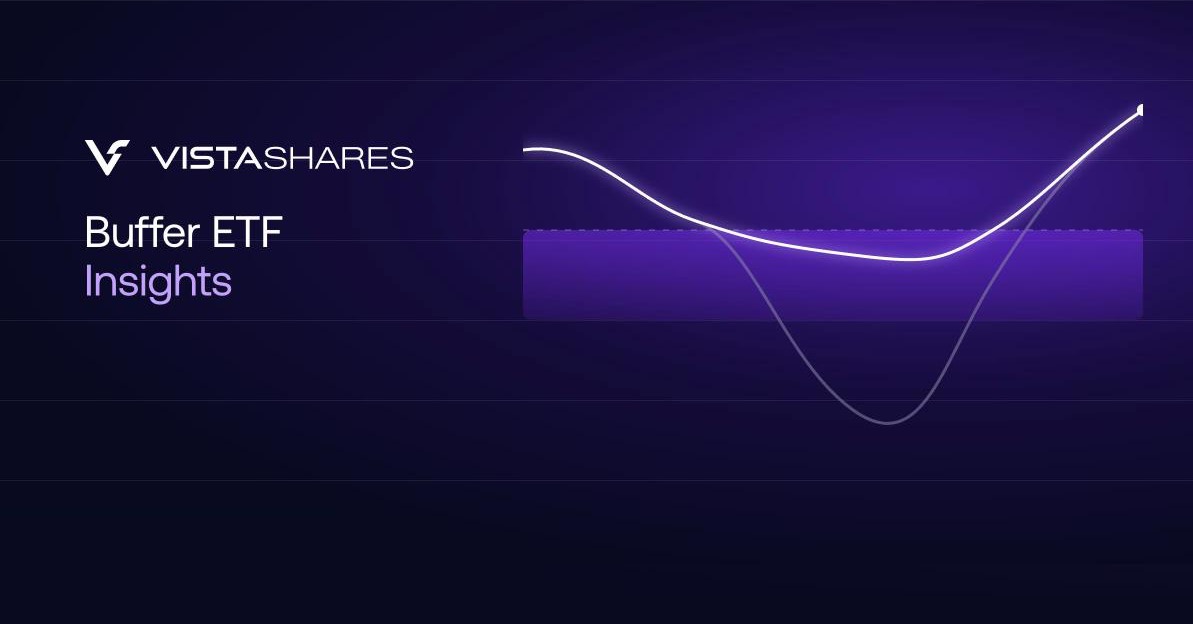
A buffer ETF uses options to seek a defined range of outcomes on a reference asset, such as the S&P 500, over a set outcome period, often one year. It aims to reduce losses up to a stated buffer level in exchange for a cap on gains. The buffer reduces losses but does not eliminate them, and the specific cap and buffer depend on market conditions when the options are set.
What is a buffer ETF?
Buffer ETFs, also called defined outcome or structured outcome ETFs, package a strategy that institutions and structured product buyers have used for decades into an exchange-traded fund. Instead of owning the reference asset directly, the fund holds a combination of options on it. Together those options are designed to produce a target pattern of returns: participation in gains up to a cap, a buffer against losses up to a set level, and full exposure to losses beyond the buffer.
The first buffer ETFs came to market in 2018. The category has grown quickly since. As of late March 2026, ETF Action counted 473 buffer ETFs across 20 issuers with about $83.3 billion in assets, and by early October 2026 it reported about $101 billion across 554 funds from 22 issuers.1 Those figures describe the size of the category, not the results of any fund.
How does a buffer ETF use options?
Most buffer ETFs use FLEX options, which are exchange-listed options whose terms, such as strike price and expiration date, can be customized. FLEX options trade on exchanges and are cleared and guaranteed by the Options Clearing Corporation.2
A typical structure combines three positions, all expiring at the end of the outcome period:
A deep in-the-money call or similar position that provides exposure to the reference asset’s price movement.
A put spread that is intended to absorb losses within the buffer range. For a fund with a 10% buffer, for example, the fund is designed to absorb the first 10% of losses in the reference asset over the outcome period.
A sold call at a higher strike price, which generates premium to help pay for the put spread. Selling this call is what creates the cap: gains above its strike price belong to the option buyer, not the fund.
In plain terms, the fund pays for the buffer by giving up upside beyond a certain point. The buffer and the cap are two sides of the same trade.
What is an outcome period, and why does it matter?
The outcome period is the span over which the fund’s options are designed to deliver the stated buffer and cap. At the start of each period, the fund buys and sells a new set of options and publishes the new cap that applies for that period. At the end, the options expire and the process repeats.
The stated outcomes apply to an investor who holds the fund from the first day of the outcome period through the last day. The fund’s daily price does not move in step with the stated buffer and cap during the period, because the market values of the options change with time, volatility and interest rates. The defined outcome is measured at the end of the period, not along the way.
Issuers publish the cap, the buffer, the outcome period dates and other current information for each fund on their websites. Reading that information, and the prospectus, before investing is essential.
What determines the cap on a buffer ETF?
The cap is not chosen in advance. It is the result of option prices on the day the outcome period begins. The fund must sell enough upside, in the form of the call option, to pay for the put options it buys. When those put options cost more, the fund must give up more upside, and the cap is lower. When they cost less, the cap can be higher.
Several conditions affect that cost:
Implied volatility. Higher expected volatility generally makes put options more expensive, but it also raises the premium from the sold call. The net effect on the cap depends on the shape of option prices at the time.
Interest rates. Rates affect option pricing and can raise or lower caps.
Size of the buffer. A larger buffer costs more and generally results in a lower cap. Some funds offer buffers that cover a larger portion of losses, with caps set accordingly.
Dividends. Many buffer ETFs reference a price-return index, which means investors do not receive the dividends paid by the index’s companies. That forgone dividend income is part of the economics of the trade.
What do buffer ETFs not do?
Buffer ETFs are designed to manage the range of outcomes, not to remove risk.
They reduce losses, but do not eliminate them. If the reference asset falls by more than the buffer over the outcome period, the investor bears the losses beyond it. A fund with a 10% buffer is designed to absorb the first 10% of losses, and an investor would experience losses below that level.
They cap gains. In a strongly rising market, a buffer ETF generally trails the reference asset because gains above the cap are given up.
They charge fees. Fees and expenses reduce returns and apply whether or not the buffer comes into play. Outcomes stated before fees differ from what investors receive.
They depend on the options structure. Although FLEX options are cleared through the Options Clearing Corporation, the strategy still depends on options markets functioning and on the fund executing its trades as designed. Investments involve risk, including possible loss of principal.
How do buffer ETFs compare with other ways to manage risk?
Investors can manage equity risk in several ways: holding more cash or bonds, diversifying across asset classes, or using options-based funds. Each involves a trade-off. Holding cash removes market risk but also removes market participation. Bonds bring their own interest rate and credit risks. A buffer ETF keeps a defined exposure to equities while narrowing the range of outcomes over a set period.
Buffer ETFs also differ from covered call ETFs. Both use options, but for different purposes. A covered call fund sells calls mainly to generate income, and its downside cushion is limited to the premium it collects. A buffer fund combines options mainly to shape the range of returns, and typically pays no meaningful income. Our article on how covered call ETFs work explains the income-focused approach.
Some investors use several buffer ETFs with different outcome periods, a practice called laddering, so that a portion of the allocation resets at different times of the year. Laddering spreads the timing of resets rather than relying on market conditions on a single start date.
Who might consider a buffer ETF?
Buffer ETFs are commonly used by investors who want some equity market participation but have a lower tolerance for drawdowns over a defined horizon, such as those approaching or in retirement, or investors bringing cash back into equities in stages. Advisors also use them as a building block within broader allocations. Whether a buffer ETF fits depends on the investor’s time horizon, goals and willingness to give up some upside, and on whether they can hold for the full outcome period.
How are buffer ETFs taxed?
Like other ETFs, buffer ETFs generally aim to limit capital gains distributions through the in-kind creation and redemption process, but they may still distribute gains. Tax treatment of a particular fund depends on its holdings and activity, and investors should consult the prospectus and a tax advisor. The character of any distribution is reported on Form 1099-DIV after year-end.3
Frequently asked questions
What happens if the market falls more than the buffer?
The investor bears losses beyond the buffer. For example, if a fund’s buffer covers the first 10% of losses over its outcome period and the reference asset falls further, the fund is designed to lose roughly the amount of the decline beyond 10%, before fees. The buffer narrows losses; it does not stop them.
Why does the cap change from one outcome period to the next?
The cap is set by option prices on the day each outcome period begins. Volatility, interest rates and the size of the buffer all affect how much upside the fund must sell to pay for its buffer. Because those conditions change, the cap for a new period can be higher or lower than the cap for the prior period.
Do buffer ETF investors receive dividends from the underlying index?
Usually not. Many buffer ETFs track the price return of an index such as the S&P 500, which excludes dividends paid by its companies. Investors should check the prospectus to see whether the reference asset is a price-return or total-return measure.
Is a buffer ETF the same as a structured note?
No. Both can offer similar payoff patterns, but a buffer ETF is a registered fund that trades on an exchange, holds exchange-listed options cleared by the Options Clearing Corporation and resets periodically. A structured note is debt issued by a bank, so it carries that bank’s credit risk and may be difficult to sell before maturity.
What does a fund’s daily price tell me during an outcome period?
The daily price reflects the current market value of the fund’s options, which change with time remaining, volatility and interest rates. It does not track the stated buffer and cap during the period, because those outcomes are designed to apply to an investor who holds from the start of the outcome period to its end.
Can a buffer ETF lose money even if the index is flat?
Yes. Fees and expenses reduce returns in every period. A fund that references a price-return index also does not collect the index’s dividends. As a result, a fund’s return over an outcome period can be below the reference asset’s price change, even when that change is close to zero.
- ETF Action, Buffer ETF weekly channel recaps (March 27, 2026, and October 5, 2026).
- Options Clearing Corporation, “Characteristics and Risks of Standardized Options,” including the FLEX options supplement; Cboe Global Markets, FLEX options product information.
- IRS Instructions for Form 1099-DIV.
Cite this page: Adam Patti, "How Do Buffer ETFs Work?," VistaShares, updated November 13, 2026, https://www.vistashares.com/how-do-buffer-etfs-work/. Plain-text version.
This material is provided for educational purposes only. It is not investment, legal or tax advice, and it is not a recommendation or an offer to buy or sell any security. Information is drawn from sources believed to be reliable as of the date of publication, is not guaranteed as to accuracy or completeness, and may change without notice. Figures attributed to third parties are their estimates. Projections and forecasts are not guarantees of future results. Investors should consult their own financial, legal and tax professionals before making investment decisions. Investments involve risk, including possible loss of principal. Strategies that use options involve additional risks, including limited participation in market gains, the risk that options do not perform as intended, and changes in distributions. Tax treatment depends on individual circumstances and on current law, which may change.