
Bill of Materials Approach
HoverPress to explore
Weights are illustrative and may change.
Our Methodology
We map the components, equipment, infrastructure, and technologies required for an investment theme to scale, then identify the companies supplying each piece.
Instead of weighting by market cap, we weight by the role each part of the buildout plays. The result is exposure designed to follow where industry CAPEX is going, not simply where market value already sits.
가격 및 성능
ETF 가격
2026년 11월 12일 현재
NAV
--
일일 변경사항
----%
시장 가격
--
일일 변경사항
----%
| 실적 기록 2026년 11월 14일 현재 | 인셉션 이후 | 1M | 3M | YTD | 1Y |
|---|---|---|---|---|---|
| NAV | -- | -- | -- | -- | -- |
| 시장 가격 | -- | -- | -- | -- | -- |
실적 기록
2026년 11월 14일 현재
인용된 실적 데이터는 과거 실적을 나타냅니다. 과거 실적은 향후 결과에 대한 보장은 아닙니다. 투자 수익과 투자 원금의 가치는 변동하므로, 투자자가 주식을 매각할 때 그 가치는 원래 비용보다 더 많거나 적을 수 있습니다. 펀드의 현재 성과는 표기된 성과보다 낮거나 높을 수 있습니다. 가장 최근 한 달 말의 성과를 확인하려면 (844) 875-2288로 문의하십시오.
투자는 원금 손실 가능성을 포함한 위험이 따릅니다. 모든 ETF의 주식은 시장 가격(NAV가 아닌)으로 매매되며, NAV보다 할인 또는 프리미엄으로 거래될 수 있습니다. 주식은 해당 펀드에서 개별적으로 상환되지 않으며, 창립 단위 단위로만 펀드에서 취득 또는 상환할 수 있습니다. 중개 수수료는 수익률을 감소시킬 수 있습니다.
Short term performance, in particular, is not a good indication of the fund’s future performance, and an investment should not be made based solely on returns. Returns beyond 1 year are annualized. A fund’s NAV is the sum of all its assets less any liabilities, divided by the number of shares outstanding. The market price is the most recent price at which the fund was traded.
FAQ
GALX란 무엇인가?
GALX는 스페이스 인프라 ETF인 VistaShares Space Supercycle® ETF입니다. 이 ETF는 우주 기반 인프라 및 서비스를 구축, 발사, 운영 및 제공하는 글로벌 기업에 투자합니다. 이 ETF는 발사 및 우주기지 시스템, 우주선 및 위성, 지상 기반 인프라, 우주망, 그리고 우주 안전, 보안 및 데이터 인프라를 통해 수익을 창출하는 기업에 적극적으로 투자하여 장기적인 자본 가치 상승을 추구합니다.
GALX는 주식인가 ETF인가?
GALX is an exchange-traded fund (ETF), not a single company’s stock. One GALX share represents an interest in a portfolio of global space companies, and the shares trade during market hours like a stock under the ticker GALX.
GALX는 무엇을 가지고 있나요?
GALX는 우주 가치 사슬의 다섯 부분에 속한 글로벌 기업의 주식을 보유하고 있습니다. 그 부분들은 다음과 같습니다: 우주 접근, 발사, 추진 및 우주기지 시스템; 우주선, 위성 및 탑재물; 지상 구간 인프라; 우주 통신 및 항법 네트워크; 그리고 우주 안전, 보안 및 우주로부터의 데이터 인프라입니다. 전체 보유 주식 목록은 GALX 펀드 페이지에서 확인할 수 있으며 매일 업데이트됩니다.
What kinds of companies does GALX not include?
GALX seeks companies that derive their revenues from one of its five space segments and that have significant economic exposure to the space economy. Companies whose space activity is incidental to their main business are generally outside its mandate. GALX, like every VistaShares fund, does not hold private companies.
Who manages GALX?
GALX’s investment adviser is VistaShares Advisors LLC, and the portfolio is run by the VistaShares Investment Committee, which maps the space value chain, selects and weights companies in each of its five segments, and monitors them between rebalances. More about the firm is on the VistaShares에 관하여 페이지.
Who oversees the management of VistaShares ETFs?
The VistaShares Investment Committee oversees and manages all VistaShares ETFs, pairing investment professionals and scholars with advisors who have operated businesses in each fund’s industry. For GALX, that includes experience building and producing satellite platforms and working on launch vehicle programs. See the VistaShares에 관하여 page for more.
How does GALX work?
GALX maps the space supply chain, from launch through satellites, ground systems, networks and space data, using VistaShares’ Bill of Materials process, then selects and weights the companies contributing to each step. It is actively managed under a rules-based methodology set out in its rule book, rebalanced each June and December, and the Investment Committee may add or remove companies in between.
How are VistaShares ETFs managed?
VistaShares ETFs are actively managed and follow a researched, rules-based methodology designed to provide exposure to the theme an investor is seeking. In GALX, that theme is space infrastructure, and the committee overseeing it includes advisors who build spacecraft.
What is the active "risk management overlay"?
In GALX, the risk management overlay is the Investment Committee’s monitoring of companies across launch, spacecraft, ground, network and space data segments between the June and December rebalances. If, for example, a company’s business changes, the committee may add or remove it before the next rebalance date. The overlay is designed to let the portfolio respond to changes; it does not eliminate risk.
What are supercycles?
Supercycles are long-term trends in which technological advances disrupt existing economic models. GALX is built around the space economy: the companies that build, launch, operate and enable space infrastructure and services. See our guide to what a supercycle is in investing.
What is the space supercycle?
The space supercycle is VistaShares’ term for the long-term build-out of the global space economy: launch systems, spacecraft and satellites, ground infrastructure, space networks and space-derived data. VistaShares calls it a supercycle because it views space technology as an advance that is disrupting existing economic models. GALX seeks Pure Exposure™ to the companies across this value chain.
How does VistaShares analyze target industries?
VistaShares analyzes each target industry’s supply chain to identify the companies and profit pools in each sub-industry segment that have significant economic exposure to the theme. For GALX, the segments run from getting to orbit, through building and operating spacecraft, to communicating with them and using the data they produce.
What is the "Bill of Materials" process?
The Bill of Materials process is how VistaShares identifies and weights the companies contributing to each step in the production process that leads to a final product. For GALX, that means breaking a space mission into its parts, such as the launch vehicle, the satellite and its subsystems, the ground station, the network and the data service, and finding the companies that supply each.
What sections are included in the Space Supercycle Bill of Materials?
The Space Supercycle Bill of Materials has five sections: space access, launch, propulsion and spaceport systems; the space segment, including spacecraft, satellites, payloads and space-qualified subsystems; ground segment infrastructure; space networks; and space safety, security, reliability and space-derived data infrastructure.
Does GALX invest in rocket launch companies?
Yes. Space access, launch, propulsion and spaceport systems make up the first section of GALX’s Bill of Materials, so the fund invests in companies whose revenues come from getting payloads to space and the facilities that support launches. Launch companies carry specific risks, including launch failures, delays and cost overruns.
Is there a satellite ETF?
GALX invests in satellite companies as one of its five Bill of Materials sections: spacecraft, satellites, payloads and space-qualified subsystems. It is not a dedicated satellite fund; it also covers launch, ground infrastructure, space networks and space data.
What is the ground segment, and why does GALX include it?
The ground segment is the equipment and services on Earth that operate spacecraft: terminals, gateways, telemetry, tracking and command (TT&C) systems, and mission operations. Satellites depend on it to function, so GALX’s Bill of Materials includes companies that supply it.
Does GALX invest in satellite communications and GPS-type navigation?
Yes. Space networks are one of GALX’s five Bill of Materials sections, covering satellite communications, inter-satellite links and space-based positioning, navigation and timing (PNT) infrastructure, the category that includes satellite navigation systems.
What is space-derived data and space safety infrastructure?
This GALX section covers space domain awareness and space situational awareness (tracking objects in orbit), cybersecurity and resilience for space systems, qualification and testing services, and the downlink, processing and commercialization of datasets collected from space. It reflects the services that keep space systems safe and turn their data into products.
How many holdings does the portfolio hold at any time?
The number of holdings varies as the portfolio is rebalanced; GALX typically holds between 50 and 70 space companies. The full holdings list is on the fund page and is updated daily.
How often is the portfolio rebalanced?
GALX is rebalanced semi-annually, in June and December. Between those dates, the Investment Committee may add or remove space companies through its risk management overlay.
Where can I find additional information on the fund construction / methodology?
The full methodology is in the VistaShares Space Supercycle® ETF (GALX) rule book, linked from the GALX fund page. The fund page also links the prospectus, summary prospectus, SAI and shareholder reports.
Is there a space ETF?
Yes. GALX, the VistaShares Space Supercycle® ETF, is a space ETF holding global companies across launch, satellites, ground systems, space networks and space data. It seeks long term capital appreciation. Other space ETFs take different approaches, so compare objectives, holdings, fees and risks with a financial advisor.
Is there a space infrastructure ETF?
Yes. GALX is positioned as a space infrastructure ETF: it focuses on the systems that make the space economy work, from launch vehicles and spaceports to satellites, ground stations and communication networks, rather than on any single company. It trades under the ticker GALX.
Does GALX own SpaceX?
Yes. GALX holds SpaceX. The fund’s full holdings list, updated daily, is on the GALX fund page and shows its current holdings. GALX also invests in other global companies across launch, spacecraft and satellites, ground infrastructure, space networks and space data, so it is not a single-company investment.
Can GALX buy shares in space company IPOs?
Yes. GALX may purchase securities of companies offered in an initial public offering (IPO). IPO shares can fluctuate considerably because there is no prior public market, few shares may trade and information about the issuer may be limited. While the fund’s assets are small, IPO investments can have a magnified effect on its performance.
How can I invest in the space economy?
One route is a space ETF such as GALX, which holds global companies across launch, satellites, ground systems, networks and space data in a single fund. Buying individual space stocks is another route, with more company-specific risk, since many space companies have limited operating histories. Discuss with your financial advisor which approach, if any, fits your portfolio. See our guide to the space economy.
How is GALX different from owning a few space stocks?
A few space stocks concentrate results in those companies, many of which depend on a small number of products, customers or missions. GALX holds a portfolio of global companies across five segments of the space value chain, weighted by their contribution to each. It is still concentrated in one industry and carries industry-wide risks such as regulation and government budgets.
What is the best space ETF?
VistaShares does not rank ETFs, and no single fund suits every investor. GALX is an actively managed space infrastructure ETF that weights companies across launch, satellites, ground systems, networks and space data through a Bill of Materials process, overseen by an investment committee that draws on space industry operating experience. Compare objectives, holdings, fees and risks with a financial advisor.
How is GALX different from other space ETFs?
GALX differs from broad thematic funds mainly in how it selects companies. It breaks the space value chain into five segments through its Bill of Materials process, identifies companies with significant economic exposure to each, and weights them by their contribution. Its Investment Committee draws on advisors with space manufacturing and launch experience.
How is GALX different from AMMO?
GALX invests across the commercial and government space economy. AMMO, the VistaShares Defense Infrastructure ETF, invests across the defense supply chain, and one of its sections is defense space systems, such as radiation-hardened electronics and satellite bus subsystems procured under military space programs. The two overlap in defense space.
Why is now the right time to invest in the Space Supercycle?
GALX is designed to give investors access to companies that build, launch, operate and enable the global space economy. Through an actively managed process guided by a rules-based methodology, it seeks Pure Exposure™ to the space value chain. This describes the fund’s design, not a forecast; space companies face launch, technology and regulatory risks. Investments involve risk, including possible loss of principal.
Where is the fund traded?
GALX is listed on the New York Stock Exchange (NYSE) under the ticker GALX. Current price, holdings and performance, with their as-of dates, are on the GALX fund page.
What is GALX's CUSIP, and when did it launch?
GALX’s CUSIP is 88635U507. The fund launched on July 15, 2026.
How can I buy GALX?
Search for the ticker GALX in a brokerage account, or ask your financial advisor; shares can be bought or sold whenever the market is open. The minimum is one share; you pay the market price, which may differ from net asset value, plus any brokerage commission. Before buying, the GALX prospectus and rule book on the fund page describe the strategy and risks. For fund information, call (844) 875-2288.
What is GALX's expense ratio?
GALX’s expense ratio is 0.75%, as stated on the fund page on November 12, 2026. It covers the fund’s annual operating costs and is reflected in its returns rather than billed separately.
Does GALX pay distributions?
GALX’s distribution frequency is annual. The fund seeks long term capital appreciation from space companies rather than income. Any distribution amounts and dates are on the fund page.
What are the main risks of GALX?
GALX’s main risks are space investing risks, concentration risk and foreign securities risk. It also carries IPO risk, equity market risk and economic and market risk, and as a new fund managed by a recently formed firm it has no extensive track record. The prospectus describes each risk in full. Investments involve risk, including possible loss of principal.
How do launch failures affect space companies?
Launches are complex and costly. A failure, deployment malfunction, delay or cost overrun can mean the total loss of a spacecraft or payload, large financial losses, reputational harm and more regulatory scrutiny, all of which can hurt a company’s stock price. Companies in GALX’s launch and spacecraft segments are exposed to these events. Investments involve risk, including possible loss of principal.
How do government budgets and regulation affect GALX?
Many space companies depend on government or quasi-government customers, so budget cuts, policy changes, contract terminations or failures to renew can reduce revenues. The industry is also heavily regulated, through licensing, export controls, national security rules, environmental rules and orbital debris standards, and changes can raise costs or delay operations. Investments involve risk, including possible loss of principal.
What are orbital debris and space weather risks?
Satellites and spacecraft can be damaged by orbital debris, collisions, congestion in Earth’s orbits and space weather such as solar activity. That can cause service disruptions, data loss, shorter operating lives or complete mission failure for the companies that own or operate them. Investments involve risk, including possible loss of principal.
Why are space companies considered higher risk?
Space businesses often rely on advanced or unproven technologies and can be hurt by engineering problems, design flaws or cheaper competing technologies. Many have limited operating histories, a narrow product line or a few customers, and delays in commercialization can affect profitability and valuations. Investments involve risk, including possible loss of principal.
Does GALX invest outside the US?
Yes. GALX invests in global space companies, so it can hold companies listed outside the United States. Non-US securities can be more volatile, foreign markets may be less developed or liquid, and political and economic developments abroad, including sanctions, can affect them. Investments involve risk, including possible loss of principal.
Is GALX diversified?
GALX holds many companies, but it concentrates in one industry, so economic, political or other conditions that hurt the space industry can affect the fund more than a fund invested across many industries. Its investments may be more volatile than those of more diversified funds. Investments involve risk, including possible loss of principal.
Is GALX a new fund?
Yes. GALX launched on July 15, 2026, so investors do not have an extensive track record on which to base decisions. VistaShares is a recently formed firm with limited experience managing ETFs, which may limit its effectiveness. Investments involve risk, including possible loss of principal.
Is GALX a good investment?
GALX is designed to seek long term capital appreciation by investing in global space infrastructure companies, from launch and satellites to ground systems and space data, as a thematic allocation alongside core equity holdings. It carries space investing risks such as launch failures and dependence on government contracts, industry concentration risk and IPO risk. Whether GALX is appropriate depends on your objectives and circumstances; discuss it with your financial advisor and read the prospectus.
Building the infrastructure of the space economy
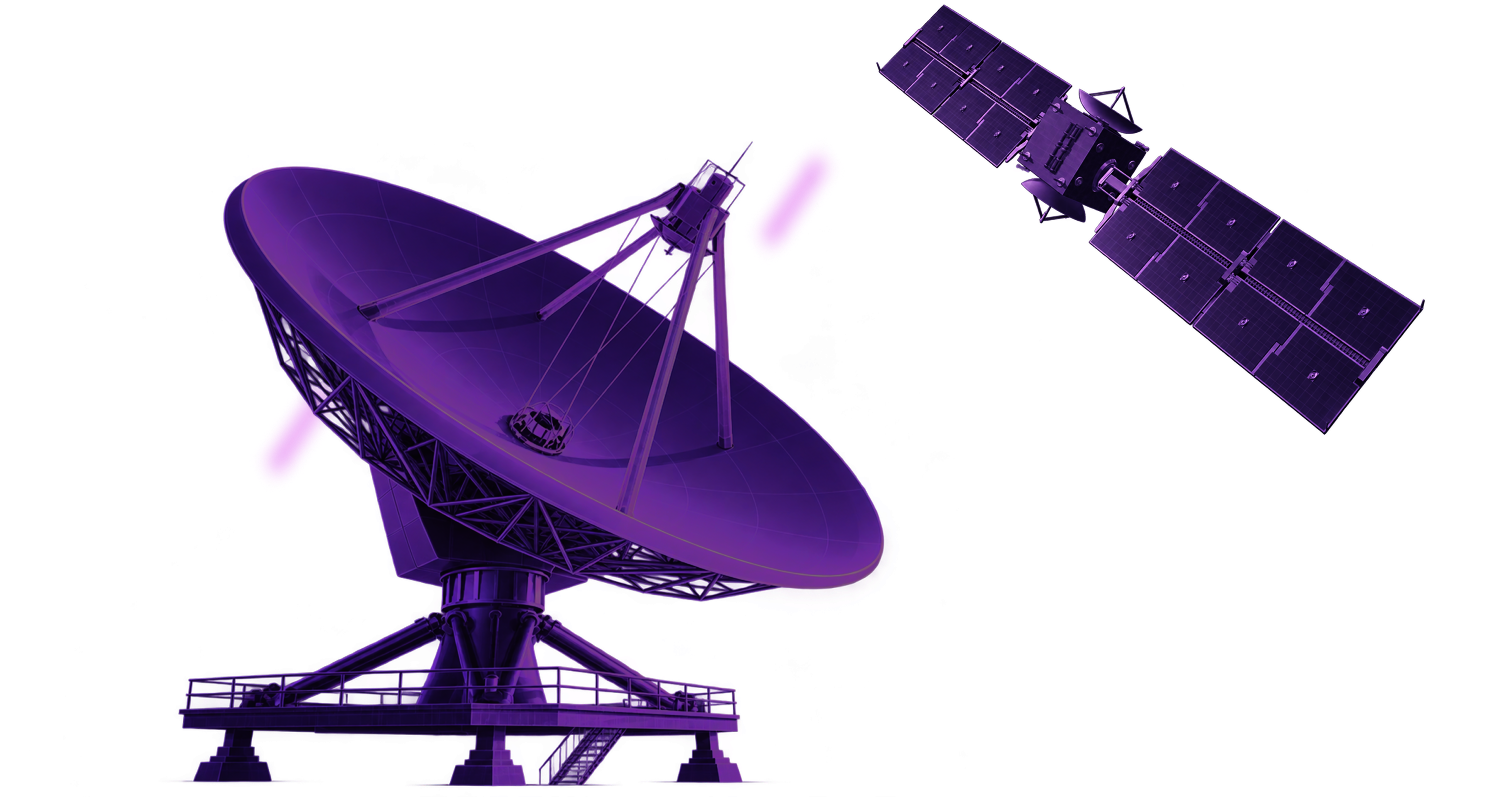
Satellite communications, Earth observation and national-security missions depend on infrastructure in orbit and on the ground. We believe expanding use of these capabilities could support a multiyear investment cycle across the space economy.
That investment can include launch vehicles and propulsion, satellite platforms and payloads, communications equipment, ground stations and the systems used to monitor and operate space assets.
The VistaShares Space Supercycle® ETF (GALX) invests in global companies involved in building, launching, operating and enabling space infrastructure and services.
From launch systems to ground networks
A functioning space network requires more than a successful launch. Spacecraft need power, computing, sensors and communications equipment, while ground stations and user terminals connect orbital systems with customers.
GALX uses our Bill of Materials approach to map these requirements and identify companies supplying the components, infrastructure and services behind space activities. This analysis helps inform portfolio construction across launch systems, spacecraft, ground networks and related operations.
Commercial demand may develop more slowly than expected. High capital requirements, financing constraints, launch failures and mission delays can affect the viability of space projects and the companies supporting them.

ETF Objective
The VistaShares Space Supercycle® ETF seeks long term capital appreciation by actively investing in a portfolio of global space companies that derive their revenues from space access, launch, propulsion and spaceport systems; spacecraft, satellites and payloads; ground segment infrastructure; space communications and navigation networks; and space safety, security and space-derived data infrastructure.
Managed with domain expertise

이언 캔넬
투자위원회 자문위원

저스틴 로파스
투자위원회 자문위원

존 맥닐
공동 창립자

로버트 위트레이
최고 투자 전략가

아담 파티
최고 경영 책임자

데이비드 페터스톤호
최고 투자 책임자
이언 캔넬
투자위원회 자문위원
이언 카민은 Apex의 CEO이자 공동 창업자입니다. Apex는 고속 구성 가능한 위성 버스 플랫폼 제조업체로, Fast Company의 2025년 가장 혁신적인 기업 중 하나로 선정되었습니다. 세계 최고의 투자자들의 5억 달러 이상의 자금 지원을 바탕으로, Apex의 첫 번째 위성 버스는 생산 중인 우주선에서 가장 빠른 클린시트 설계로 세계 기록을 세웠습니다. 공간.
빠르게 성장하는 우주 산업의 요구를 충족하고 골든돔과 같은 국가 안보 중요 임무를 수행하기 위해 노력하는 Apex는 상용 및 정부 기관 모두에게 확장 가능한 플랫폼을 제공합니다. 분야들. Apex의 로스앤젤레스 생산 시설은 업계 표준인 몇 달 또는 몇 년이 아닌 수주 내에 고객에게 위성 버스를 공급할 수 있으며, 전체 생산 규모로 연간 200개 이상의 버스를 생산할 수 있는 역량을 갖추고 있습니다.
아펙스와의 협력 이전, 이안은 보안 및 방위 분야의 인공지능 전문 기업인 시냅스를 설립했습니다. 이안은 팔란티리 인수 후 이 기업을 이끌었습니다. 이안의 경력 초기에는 슈퍼랩스를 공동 창립했으며, 해당 기업은 인수 후 Zynga에 매각되었습니다. 이안은 해당 기업의 제품 책임자로 활동했습니다.
이언은 포브스 선정 “30세 이하 30인’에 선정된 인물이며, Y Combinator의 전직 졸업생입니다. 그는 MIT에서 학사 학위를 받았고, 스탠퍼드 경영대학원에서 MBA 학위를 취득했습니다.
저스틴 로파스
투자위원회 자문위원
저스틴 로파스는 테네시주 오스틴에 본사를 둔 에너지 기술 기업인 Base Power의 공동 창립자이자 최고운영책임자입니다. 이 기업은 가정용 배터리를 통해 전력망을 현대화하고 분산화하는 데 주력하고 있습니다. 시스템. 2023년에 Base Power를 설립하기 전, 그는 Anduril Industries의 제조 부문을 이끌었으며, SpaceX에서 근무했습니다. 그는 스타십 프로그램 구축과 텍사스에 스타베이스 지점을 설립하는 데 핵심적인 역할을 담당했습니다.
안듀릴에서 그는 고급 방위 시스템의 제조, 운영 및 공급망을 관리하는 150명 이상의 팀을 이끌었습니다. 스페이스X에서 배운 정밀 설계 철학으로 유명한 로파스는 이제 이러한 원칙을 확장 가능한 에너지 인프라에 적용하여 배터리 저장소를 지능형 그리드 기술로 전환하는 데 도움을 주고 있습니다.
미시간 대학에서 기계공학 학위를 취득한 로파스는 애플과 베이커 휴즈에서도 근무했습니다.
존 맥닐
공동 창립자

존은 현재 벤처 스튜디오인 DVx Ventures의 CEO이자 공동 창립자입니다. 존은 6개의 회사를 설립하고 성장시킨 경력을 가지고 있으며, 수만 개의 일자리를 창출하고 투자자들에게 수십억 달러의 수익을 창출한 팀을 이끌었습니다. DVx에서 존과 그의 팀은 대규모 시장에서 광범위한 기회를 겨냥한 13개의 회사를 설립했습니다.
이전에는 존은 테슬라의 사장으로 재직하면서 매출이 단 30개월 만에 2억 달러에서 20억 달러로 성장했습니다. 이후 존은 리프트의 COO로 합류하여 매출을 두 배로 늘리고 회사를 상장시키는 데 핵심적인 역할을 수행했습니다. 유니콘을 창출한 실리콘밸리 기업가로 6번이나 성공한 경력을 가진 존은 매출 및 운영 측면에서 극대화된 성장을 거치는 시기에 기업 운영과 확장 과정에서 풍부한 경험을 가지고 있으며, 9배의 수익성을 창출했습니다. 투자자들입니다.
존은 현재 Advent International과 Goodwater Capital에서 자문 파트너로 활동하고 있으며, Cruise의 이사회 부의장으로 활동하고 있습니다. 또한 그는 General Motors, Asurion, CrossFit, Stash 및 Lululemon의 이사회 회원으로도 활동하고 있습니다. Lululemon 이사회에서 재임 중이던 그는 회사의 재정 상태가 개선되어 주식 가치가 5배 증가했습니다.
존은 인기 있는 강연자이며, 하버드 비즈니스 스쿨과 MIT 슬론 경영대학원에서 강의를 자주 합니다. 존은 베인앤컴퍼니에서 경력을 시작하기 전에 노스웨스트 대학을 졸업했습니다.
로버트 위트레이
최고 투자 전략가
로버트 F. 위텔로우는 최근에 학부 대학장의 직을 맡았으며, 뉴욕대학교 레오나드 N. 스턴 경영대학의 에드워드 C. 존슨 3대 기업가금융 교수로서 계속해서 봉사하고 있다.
위트레이 교수는 시장 수준의 위험-수익 불일치를 해결하고 정보 처리의 역할이 과도한 변동성 요인을 설명하는 방안을 제시했으며, 마찰 요인들이 시장의 명백한 비효율성을 유발하는 요인이라는 점을 밝혀낸 등 경험적 자산 가격 결정에 관한 종합적인 연구로 가장 잘 알려져 있다. 그의 연구는 고정수익 증권의 가격 결정과 헤징, 그리고 위험 측정 및 관리에도 적용된다.
그의 논문은 재무학 저널(Journal of Finance), 금융경제학 저널(Journal of Financial Economics), 재무연구저널(Review of Financial Studies) 등 학술지에 게재되었으며, 파생상품 저널(Journal of Derivatives), 고정금리저널(Fixed Income, Risk), 재무분석가 저널(Financial Analysts Journal) 등 실무자들을 위한 저널에도 게재되었습니다. 그의 연구는 골드만삭스 자산운용 및 시카고 정량협회(Chicago Quantitative Alliance) 등 기관으로부터 상을 받았습니다. 또한 그는 국립경제연구원(NBER) 자산가격화 프로그램(Asset Pricing Program)의 연구조교이자 재무연구저널 및 재무학저널의 전임 부편집장입니다.
그는 스탠포드 경영대학원에서 금융학 박사 학위를 받았으며, MIT에서 수학 학사 학위를 받았습니다. 위트레일 교수는 MBA, 학부 및 임원 과정에서 포트폴리오 관리, 투자/자본시장, 국제금융을 가르치고 있으며, 박사 과정에서는 자산가격학을 가르치고 있습니다.
아담 파티
최고 경영 책임자
아담은 교환형 펀드 산업의 선구자입니다. VistaShares 설립 이전, Adam은 모든 투자자들의 포트폴리오 구축을 강화하기 위해 기관 수준의 대체 투자 전략과 ETF의 강력한 장점을 결합하겠다는 비전을 가지고 IndexIQ를 설립했습니다. IndexIQ는 ETF 업계의 선도적인 대체투자 관리사로 자리매김했으며, 2015년에 뉴욕 라이프 보험 회사에 인수되었습니다.
IndexIQ의 회장 겸 CEO로서 Adam은 IndexIQ의 수상 경력에 빛나는 대체투자 전략 제품 라인의 설계자였으며, 인수 후에는 회사를 뉴욕라이프 인베스트먼트의 인프라에 성공적으로 통합하는 데 힘써 왔으며, 이는 전 세계적으로 IndexIQ 브랜드의 ETF 출시를 포함합니다.
IndexIQ를 설립하기 전, 아담은 TimeWarner에서 일련의 고위 임원직을 맡았습니다. 그 중에서도 Fortune Magazine에서 Fortune Indexes의 리더 역할을 맡았습니다. Fortune Indexes는 최초의 스마트 베타 지수인 IndexIQ의 창시자입니다. 이 회사는 2000년 State Street Global Advisors와 협력하여 Fortune 500 ETF를 출시한 최초의 ETF 기업이기도 합니다.
아담은 종종 언론에 소개되며 ETF 및 대체투자 분야의 전문가로서 다수의 상을 받았습니다. 그는 노스웨스트 대학교(케일로그 경영대학)에서 금융, 마케팅 및 기업가 정신을 전공으로 삼고 MBA 학위를 받았으며, B.S. 학위를 취득했습니다. 알바니 대학교에서 금융학을 전공했습니다.
데이비드 페터스톤호
최고 투자 책임자
데이비드는 DVx의 대표이며, 신규 사업 및 외부 투자에 대한 검토를 감독합니다. DVx에 합류하기 전, 데이비드는 글로벌 기술 투자 펀드인 Mithril Capital Management에서 근무했습니다. Mithril에서 데이비드는 투자팀에서 일하며 이종 투자 기회를 평가하고 포트폴리오 기업을 지원했습니다. 데이비드는 맥길 대학교를 졸업했습니다.
- 출시일
- July 15, 2026
- 비용 비율
- 0.75%
- 순자산
- --
- 타이커
- GALX
- CUSIP
- --
- 주요 거래소
- 뉴욕 증권거래소
- 유통중인 주식 수
- --
- 지분 보유 수
- --
- 프리미엄/할인
- --
- 30일 평균 매수/매도 스프레드
- --
Median 30 Day Spread is a calculation of Fund’s median bid-ask spread, expressed as a percentage rounded to the nearest hundredth, computed by: identifying the Fund’s national best bid and national best offer as of the end of each 10 second interval during each trading day of the last 30 calendar days; dividing the difference between each such bid and offer by the midpoint of the national best bid and national best offer; and identifying the median of those values.
이펀드는 향후 어떻게 성과를 내는지에 대한 보장은 없습니다. 또한 특정 달에 지급될 지급금이 정해진 대로 이루어질 것이라는 보장은 없습니다. 또한 결과는 매우 달라질 수 있습니다.
- SEC 수익률 30일 평균
- --%
- 유통 빈도
- Annually
The 30-Day SEC Yield represents net investment income earned by the Fund over the 30-day period ended on the date indicated by the Yield, expressed as an annual percentage rate based on the Fund’s share price at the end of the 30-day period. The unsubsidized 30-Day SEC Yield does not reflect any fee waivers/reimbursements/limits in effect.

Harness the power of Pure Exposure™
기금별 공개
Space Investing Risks. The Fund invests in companies that derive a substantial portion of their revenues or operating activities from space-related technologies and services and, as a result, is subject to risks associated with companies engaged in the space industry and the broader space economy, which may cause the Fund’s investments to be more volatile than those of more diversified funds. Companies involved in the design, manufacture, or launch of spacecraft, launch vehicles, or related systems face significant risks associated with launch failures, deployment malfunctions, mission delays, and cost overruns; space launches are inherently complex and costly, and failures may result in the total loss of spacecraft or payloads, substantial financial losses, reputational harm, increased regulatory scrutiny, and adverse impacts on a company’s financial condition and stock price. Space-related businesses often rely on advanced, emerging, or unproven technologies and may be adversely affected by rapid technological change, engineering challenges, design flaws, the inability to achieve expected performance, or competitors’ development of superior or lower-cost technologies. The space industry is subject to extensive domestic and international regulation (including licensing requirements, export controls, national security restrictions, environmental regulation, and orbital debris mitigation standards), and changes in laws, regulations, or regulatory interpretations may increase compliance costs, delay operations, restrict market access, or limit the deployment or operation of space-based systems. Many space-focused companies depend on governmental or quasi-governmental customers and contracts, and reductions in government budgets, policy changes, contract terminations, delays, or failures to renew contracts could materially and adversely affect revenues and financial performance. Space-based operations are exposed to risks arising from orbital debris, collisions, congestion in Earth’s orbits, and space weather (including solar activity), any of which may damage satellites or spacecraft and result in service disruptions, data loss, reduced operational lifespans, or complete mission failure. The space economy is evolving, and many companies may have limited operating histories, depend on a narrow set of products or services, or rely on a small number of customers or missions for a substantial portion of revenues; delays in commercialization or failure to achieve anticipated adoption of space-based services may adversely affect profitability and valuations.
주식 시장 위험요소. Common stocks are generally exposed to greater risk than other types of securities, such as preferred stock and debt obligations, because common stockholders generally have inferior rights to receive payment from specific issuers. The equity securities held in the Fund’s portfolio may experience sudden, unpredictable drops in value or long periods of decline in value.
Economic and Market Risk. Economies and financial markets throughout the world are becoming increasingly interconnected, which increases the likelihood that events or conditions in one country or region will adversely impact markets or issuers in other countries or regions. Securities in the Fund’s portfolio may underperform in comparison to securities in the general financial markets, a particular financial market, or other asset classes, due to a number of factors, including inflation (or expectations for inflation), deflation (or expectations for deflation), interest rates, global demand for particular products or resources, market instability, financial system instability, debt crises and downgrades, embargoes, tariffs, sanctions and other trade barriers, regulatory events, other governmental trade or market control programs and related geopolitical events.
Concentration Risk. To the extent that the Fund concentrates in an industry, it will be subject to the risk that economic, political, or other conditions that have a negative effect on that industry will negatively impact the Fund to a greater extent than if its assets were invested in a wider variety of industries.
Foreign Securities Risk. Investments in securities or other instruments of non-U.S. issuers involve certain risks not involved in domestic investments and may experience more rapid and extreme changes in value than investments in securities of U.S. companies. Financial markets in foreign countries often are not as developed, efficient, or liquid as financial markets in the United States, and therefore, the prices of non-U.S. securities and instruments can be more volatile. In addition, the Fund will be subject to risks associated with adverse political and economic developments in foreign countries, which may include the imposition of economic sanctions.
IPO Risk. The Fund may purchase securities of companies that are offered in an IPO. The risk exists that the market value of IPO shares will fluctuate considerably due to factors such as the absence of a prior public market, unseasoned trading, the small number of shares available for trading and limited information about the issuer. When the Fund’s asset base is small, a significant portion of the Fund’s performance could be attributable to investments in IPOs, because such investments would have a magnified impact on the Fund.
Newer Sub-Adviser Risk. VistaShares is a recently formed entity and has limited experience with managing an exchange-traded fund, which may limit the Sub-Adviser’s effectiveness.