
Thematic and Infrastructure Investing
What sits inside today's major investment themes, from the AI supply chain and data centers to the space economy, defense and robotics.
Thematic investing targets long-term structural changes, such as artificial intelligence, the space economy, defense modernization and robotics, rather than a traditional sector or region. An infrastructure lens focuses on the companies that supply the components, systems and capacity a theme needs in order to grow.
Themes cut across sectors, so evaluating a thematic fund means looking at what it actually holds: how closely its companies are tied to the theme, how concentrated it is, how much it overlaps with broad-market funds, and what it costs.
What is the AI supply chain?
It runs from chip design and manufacturing through memory, networking and servers, into data centers, and finally to the power generation and grid equipment that supply them. A shortage in any layer can limit how quickly AI capacity is built. Explore the layers below.
Explore
The AI supply chain, layer by layer
Accelerators and processors designed for AI workloads, made in leading-edge semiconductor fabs.
Read moreVisual guide
Where the money goes in each supercycle
Every long-term buildout has a bill of materials: the equipment, components and services that have to be paid for before it can scale. Pick a supercycle to see where the spending goes, using the latest public figures.
See how VistaShares maps the bill of materials behind each Supercycle®
Figures are the most recent published by each source and are shown for education only. They are estimates or budget requests, not forecasts, and do not describe any fund.
Read the guides
Articles in this guide
The Deployment Gap: The AI Selloff Is Pricing the Financing, Not the Demand
VistaShares research, November 2026: the AI selloff is pricing the financing of the buildout, not the demand.
Read the guide
What Is an AI ETF? Software, Infrastructure and Broad AI Funds Compared
AI ETFs range from software and infrastructure funds to broad AI themes. Learn how each type is built, what it owns and how to compare overlap...
Read the guideHow Do You Evaluate a Thematic ETF?
Thematic ETFs target long-term trends, but funds with similar names can hold very different portfolios. Learn how to assess holdings, purity, overlap and fees.
Read the guideWhat Is a Supercycle in Investing?
A supercycle is a long, demand-driven expansion lasting a decade or more. Learn where the term comes from, how research defines it and how to evaluate...
Read the guideWhat Is the AI Supply Chain, From Chips to Power?
The AI supply chain runs from chip design and manufacturing through memory, networking, data centers and power. See how each layer works and where it is...
Read the guideHow Does the Semiconductor Supply Chain Work?
The semiconductor supply chain runs from chip design and equipment to fabs, memory and packaging. Learn how each stage works and what semiconductor ETFs own.
Read the guideHow Does the Power Grid Support AI?
AI data centers need reliable electricity at scale. Learn how much they use, why grid connections and transformers are bottlenecks, and where power comes from.
Read the guideHow Do Data Centers Work?
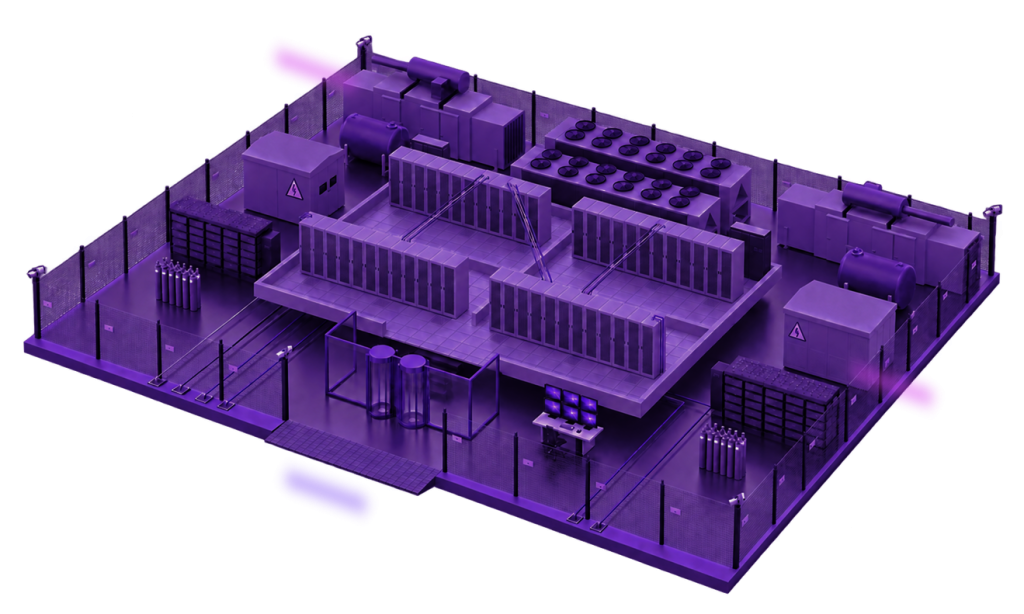
Data centers house the servers, networking and storage behind cloud computing and AI. Learn how power and cooling work, and how AI is changing their design.
Read the guideWhat Is Infrastructure Investing? Traditional vs Digital Infrastructure
Infrastructure investing spans utilities, toll roads and pipelines as well as data centers, towers and fiber. Learn how each earns revenue and how ETFs differ.
Read the guideWhat Is the Space Economy?
The space economy spans launch, satellites, communications, Earth observation, navigation and national security. Learn how it is measured and its key risks.
Read the guideHow Does the Defense Supply Chain Work?
The defense supply chain runs from prime contractors to thousands of component, materials and munitions suppliers. Learn how it is structured and funded.
Read the guideDrones and Autonomous Systems: What Is the Supply Chain Behind Them?
Drones and autonomous systems depend on motors, batteries, sensors, chips and software. Learn how the supply chain works and what is driving demand for them.
Read the guideWhat Are Humanoid Robots, and How Does the Robotics Industry Work?
Humanoid robots combine actuators, sensors, batteries and AI models in a human form. Learn how they work and how they differ from factory industrial robots.
Read the guideWhat Goes Into an AI Data Center? The Bill of Materials Explained
An AI data center's bill of materials spans power gear, cooling, accelerators, memory, networking and the building. Learn what each layer does and costs.
Read the guideGPUs vs. Custom AI Chips: What Is the Difference?
GPUs are flexible chips that run many AI workloads, while custom chips are built for specific tasks. Learn how they differ in design, supply chain and...
Read the guideWhat Is High-Bandwidth Memory, and Why Does AI Need It?
High-bandwidth memory stacks DRAM chips beside AI accelerators to feed them data quickly. Learn how HBM works, who makes it and why supply has been tight.
Read the guideHow Does AI Networking Work, and Why Do Optics Matter?
AI clusters link thousands of chips with switches, copper cables and optical transceivers. Learn how AI networking works and why optics demand has surged.
Read the guideWhy Are Data Centers Moving to Liquid Cooling?
AI racks produce more heat than air can remove, pushing data centers toward liquid cooling. Learn how direct-to-chip and immersion cooling systems work.
Read the guideHow Can AI Be Powered? Natural Gas, Nuclear and Small Modular Reactors
AI data centers need large, steady power supplies. Learn how natural gas turbines, existing nuclear plants and small modular reactors fit into the AI buildout.
Read the guideWhy Are Grid Transformers a Bottleneck for AI Data Centers?
Transformers step power up and down between plants, grids and data centers. Learn why lead times now exceed two years and how that affects the AI...
Read the guideWhich Critical Minerals Does AI Depend On?
AI chips, data centers and power grids depend on copper, gallium, germanium and rare earths. Learn which minerals matter and where their supply is concentrated.
Read the guideWhat Is Hyperscaler Capex, and Why Do Investors Watch It?
Hyperscaler capex is what big cloud companies spend on data centers, chips and power. Learn how much they spend, where it goes and how it is...
Read the guideAI Training vs. Inference: Where Is the Money Going?
Training builds AI models; inference runs them for users. Learn how spending is shifting toward inference in 2026 and what it means for chips and data...
Read the guideHow Have Reusable Rockets Changed the Cost of Reaching Space?
Reusable rockets have cut the cost of reaching orbit by about 95% since the Shuttle era. Learn how reuse works and why launch costs shape the...
Read the guideHow Does Low Earth Orbit Satellite Broadband Work?
Low Earth orbit constellations deliver internet from thousands of satellites close to Earth. Learn how LEO broadband works, how it has grown and its key risks.
Read the guideWhat Is the Satellite Supply Chain?
Satellites rely on buses, payloads, solar arrays, propulsion, chips, launch and ground stations. Learn how the supply chain works and where it is tight.
Read the guideHow Does the U.S. Defense Budget Work?
The FY2027 U.S. defense request totals about $1.5 trillion across base funding and reconciliation. Learn how the budget is built, approved and spent on weapons.
Read the guideWhy Is Expanding Munitions Production So Difficult?
U.S. artillery shell and interceptor output has risen since 2022 but remains below targets. Learn how munitions are made and where production bottlenecks sit.
Read the guideWhat Is NATO’s 5% Defense Spending Target?
NATO allies agreed in 2025 to spend 5% of GDP on defense and security by 2035: 3.5% on core defense and up to 1.5% on related...
Read the guideHow Does Space-Based Missile Defense Work?
Space-based missile defense uses satellites to detect, track and possibly intercept missiles. Learn how the Golden Dome program works, its budget and its risks.
Read the guideWhat Goes Into a Humanoid Robot? The Bill of Materials Explained
A humanoid robot's cost is dominated by actuators, plus sensors, hands, chips and batteries. Learn what goes into one and how analysts expect costs to fall.
Read the guideIndustrial Automation vs. Humanoid Robots: How Do They Compare?
Industrial robots are a large, established market, while humanoids are early. Learn how the two compare in design, cost, uses, supply chain and adoption today.
Read the guideWhat Is Physical AI?
Physical AI refers to AI that perceives and acts in the real world, from robots to self-driving vehicles. Learn how it works and which supply chains...
Read the guideWhat Is Bill of Materials Investing?
Bill of materials investing maps what a buildout buys, then builds exposure to suppliers in proportion. Learn how it works and where it falls short.
Read the guideMarket Cap Weighting vs. Spending Weighting: How Do Thematic ETFs Differ?
Market cap weighting follows company size; spending weighting follows where a buildout's dollars go. Compare how each shapes thematic ETF holdings.
Read the guideHow Does Capital Spending Signal Where a Buildout Is Going?
Capital spending shows where a buildout is going before supplier revenue does. Learn how investors read capex, budgets and investment data as thematic signals.
Read the guidePure Play vs. Broad Exposure: Which Kind of Thematic Investing Fits?
Pure play thematic funds hold companies that depend mostly on one theme; broad funds hold large firms with partial exposure. Compare purity, risk and overlap.
Read the guideWhy Do the Picks and Shovels of a Theme Matter?
Picks and shovels investing targets the suppliers a theme cannot be built without. Learn why enablers matter, where they sit and the risks they carry.
Read the guideAI Infrastructure vs. AI Software ETFs: What Is the Difference?
AI infrastructure ETFs hold the chips, power and equipment AI runs on; AI software ETFs hold companies selling AI applications. Compare drivers, risks and fit.
Read the guideThematic AI ETFs vs. Mega-Cap Tech Exposure: What Is the Difference?
Mega-cap tech funds hold the largest platform companies; thematic AI ETFs reach across the AI supply chain. Compare concentration, overlap, drivers and risks.
Read the guideDefense vs. Aerospace ETFs: What Is the Difference?
Defense ETFs follow government military budgets; aerospace ETFs add commercial aircraft and air travel. Compare what drives each, its risks and cycles.
Read the guidePower Infrastructure vs. Utility ETFs: What Is the Difference?
Utility ETFs hold regulated power companies; power infrastructure ETFs hold the equipment makers and builders behind new capacity. Compare drivers and risks.
Read the guideRobotics vs. Industrial Automation ETFs: What Is the Difference?
Robotics ETFs focus on robot makers and components; industrial automation ETFs add controls, sensors and factory software. Compare scope, drivers and risks.
Read the guideSpace ETFs vs. Satellite Communications Exposure: What Is the Difference?
Space ETFs span launch, satellites, components and defense; satellite communications exposure focuses on connectivity operators. Compare drivers and risks.
Read the guideKey figures
The category by the numbers
Combined 2026 capital spending guided by the four largest hyperscalers, nearly double 2025.
Source: VistaShares, "The Deployment Gap" (November 2026), compiling company guidance.
Estimated size of the global space economy in 2025, about 79% of it commercial activity.
Source: Space Foundation, The Space Report (2025 data).
Fiscal 2026 US Department of Defense request, including mandatory funding expected from reconciliation.
Source: Congressional Research Service, R48860 (July 2026).
Industrial robots installed worldwide in 2024, more than double the number a decade earlier.
Source: International Federation of Robotics, World Robotics 2025.
Figures are as of the dates shown and will change.
FAQ
Frequently asked questions
What is thematic investing?
Thematic investing selects companies by their exposure to a long-term trend, such as artificial intelligence or space, rather than by sector, country or size. A theme often spans several sectors at once.
What is a thematic ETF?
An exchange-traded fund that invests in companies tied to a specific theme. Thematic ETFs differ widely in how strictly they define the theme, how many companies they hold and how they weight them, so two funds on the same theme can behave very differently.
What is AI infrastructure?
The physical and digital capacity that AI systems run on: chips, memory, networking, servers, data centers and the power and grid equipment that supply them.
Why is power part of the AI supply chain?
Data centers need large, reliable supplies of electricity. Grid connections, transformers and generation capacity can take years to approve and build, which makes power one of the main constraints on how quickly AI capacity can grow.
How do you evaluate a thematic ETF?
Look at its holdings and how much of each company's business comes from the theme, how concentrated the portfolio is, how much it overlaps with broad-market or sector funds you already own, its expenses, and its trading liquidity. Discuss fit with a financial advisor.
What is the space economy?
The combined commercial revenue and government spending tied to activity in and from space, including launch, satellites and their components, ground networks and the services built on satellite data.
What is the defense supply chain?
The network of prime contractors, subsystem makers, component suppliers and materials producers that design, build and maintain military systems. Most of its spending flows from government budgets.
What are humanoid robots?
Robots built in a broadly human shape so they can work in spaces designed for people. They draw on the same supply chain as industrial robots, including actuators, sensors, batteries and control software, plus AI models for perception and movement.
For educational purposes only. This material is not investment, legal or tax advice, and it is not a recommendation or offer to buy or sell any security. Figures from third-party sources are believed to be reliable as of the dates shown but are not guaranteed. Investments involve risk, including possible loss of principal.