
VistaShares Space Supercycle® ETF
The Space Infrastructure ETF
GALX at a glance
GALX is the VistaShares Space Supercycle® ETF, a space infrastructure ETF that invests in global companies that build, launch, operate and enable space infrastructure and services. It seeks long term capital appreciation by actively investing in companies that derive their revenues from launch and spaceport systems, spacecraft and satellites, ground infrastructure, space networks, and space safety, security and data infrastructure.
- Expense ratio
- 0.75% Per prospectus
- Net assets
- $2.5M As of November 23, 2026
- Equity holdings
- 58 As of November 23, 2026
- Top 10 weight
- 40.4% As of November 23, 2026
- Distributions
- Annually Not guaranteed
- Inception
- July 15, 2026
- Exchange
- NYSE Ticker GALX
- Strategy
- Thematic equity Actively managed
Largest holdings
| Holding | Ticker | Weight |
|---|---|---|
| Avio SpA | AVIO IM | 5.01% |
| AMETEK Inc | AME | 4.45% |
| MACOM Technology Solutions Holdings Inc | MTSI | 4.21% |
| MDA Space Ltd | MDA CN | 4.19% |
| Moog Inc | MOG.A | 3.96% |
Research and guides
Bill of Materials Approach
HoverPress to explore
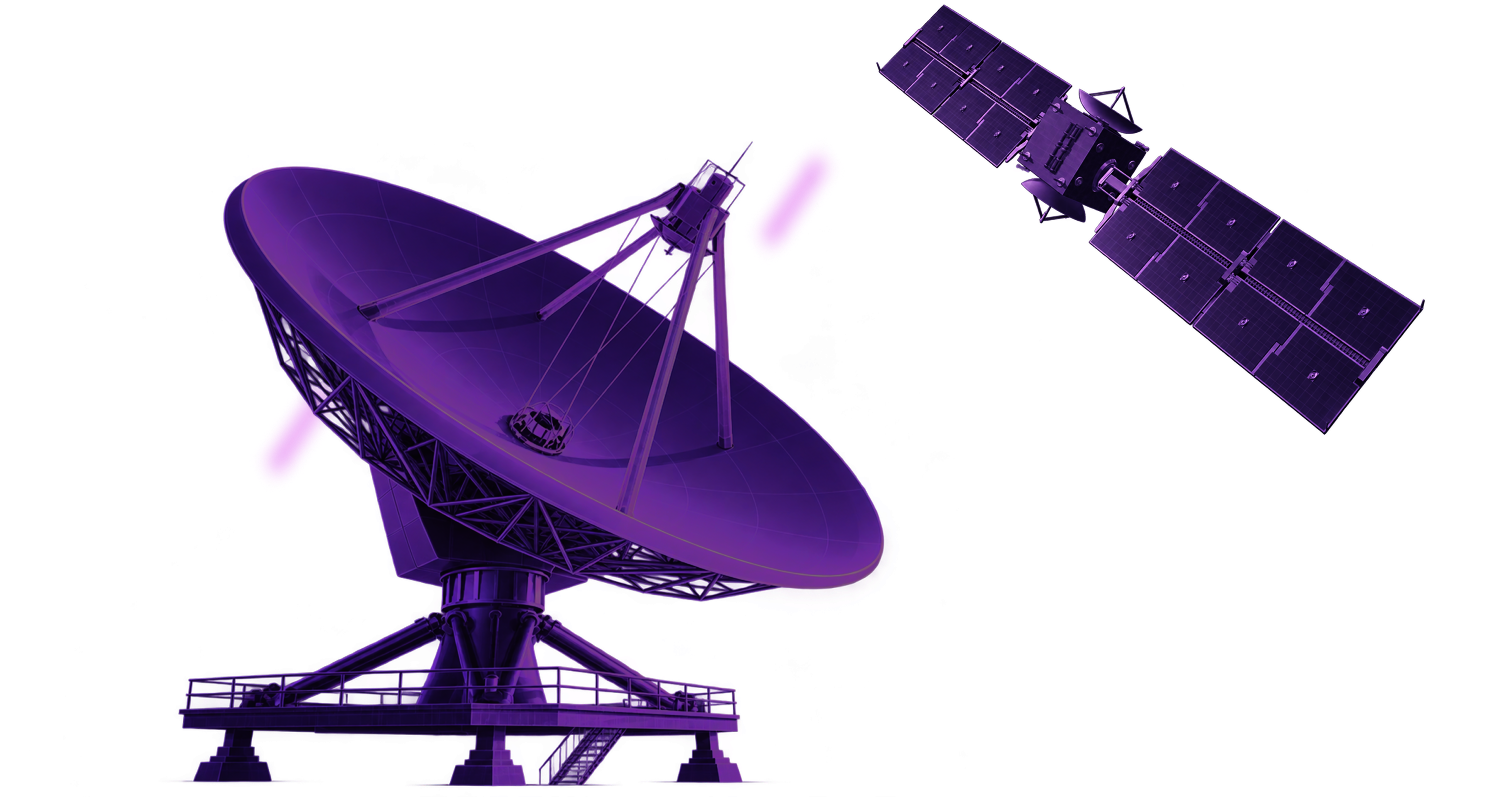
Weights are illustrative and may change.
Our Methodology
We map the components, equipment, infrastructure, and technologies required for an investment theme to scale, then identify the companies supplying each piece.
Instead of weighting by market cap, we weight by the role each part of the buildout plays. The result is exposure designed to follow where industry CAPEX is going, not simply where market value already sits.
Prices & Performance
ETF Prices
as of November 23, 2026
NAV
19.24
Daily Change
0.844.59%
Market Price
19.35
Daily Change
1.116.09%
| Performance History as of October 31, 2026 | Since Inception | 1M | 3M | YTD | 1Y |
|---|---|---|---|---|---|
| NAV | -14.95% | -9.07% | -9.31% | --% | --% |
| Market Price | -15.03% | -9.35% | -9.49% | --% | --% |
Performance History
as of October 31, 2026
Performance data quoted represents past performance; past performance does not guarantee future results. The investment return and principal value of an investment will fluctuate so that an investor’s shares, when redeemed, may be worth more or less than their original cost. Current performance of the fund may be lower or higher than the performance quoted. Performance current to the most recent month-end can be obtained by calling (844) 875-2288.
Investing involves risk, including the possible loss of principal. Shares of any ETF are bought and sold at market price (not NAV) and may trade at a discount or premium to NAV. Shares are not individually redeemable from the Fund and may only be acquired or redeemed from the fund in creation units. Brokerage commissions will reduce returns.
Short term performance, in particular, is not a good indication of the fund’s future performance, and an investment should not be made based solely on returns. Returns beyond 1 year are annualized. A fund’s NAV is the sum of all its assets less any liabilities, divided by the number of shares outstanding. The market price is the most recent price at which the fund was traded.
Holdings & Characteristics
| Top 10 Holdings as of November 23, 2026 | Ticker | Market Value | Weightings |
|---|---|---|---|
| Avio SpA | AVIO IM | $125,375.71 | 5.01% |
| AMETEK Inc | AME | $111,192.77 | 4.45% |
| MACOM Technology Solutions Holdings Inc | MTSI | $105,241.50 | 4.21% |
| MDA Space Ltd | MDA CN | $104,731.67 | 4.19% |
| Moog Inc | MOG/A | $99,027.50 | 3.96% |
| Teledyne Technologies Inc | TDY | $98,378.28 | 3.93% |
| HEICO Corp | HEI | $96,124.60 | 3.84% |
| Rocket Lab Corp | RKLB | $90,326.60 | 3.61% |
| Kongsberg Gruppen ASA | KOG NO | $89,732.06 | 3.59% |
| 5N Plus Inc | VNP CN | $89,470.36 | 3.58% |
| Filtronic PLC | FTC LN | $79,177.23 | 3.17% |
| Space Exploration Technologies Corp | SPCX | $74,542.65 | 2.98% |
| Frequency Electronics Inc | FEIM | $71,938.75 | 2.88% |
| L3Harris Technologies Inc | LHX | $56,317.43 | 2.25% |
| Safran SA | SAF FP | $55,705.38 | 2.23% |
| Firefly Aerospace Inc | FLY | $55,238.04 | 2.21% |
| Ducommun Inc | DCO | $54,310.62 | 2.17% |
| ESCO Technologies Inc | ESE | $52,193.70 | 2.09% |
| Universal Microwave Technology Inc | 3491 TT | $50,265.24 | 2.01% |
| Karman Holdings Inc | KRMN | $48,481.68 | 1.94% |
| Exail Technologies SA | EXA FP | $46,368.98 | 1.85% |
| Gilat Satellite Networks Ltd | GILT | $44,288.40 | 1.77% |
| Curtiss-Wright Corp | CW | $42,115.71 | 1.68% |
| Keysight Technologies Inc | KEYS | $38,810.42 | 1.55% |
| AST SpaceMobile Inc | ASTS | $38,710.36 | 1.55% |
| Kratos Defense & Security Solutions Inc | KTOS | $36,679.50 | 1.47% |
| UBE Corp | 4208 JP | $32,047.94 | 1.28% |
| Neo Performance Materials Inc | NEO CN | $31,471.39 | 1.26% |
| RTX Corp | RTX | $30,384.12 | 1.21% |
| BWX Technologies Inc | BWXT | $30,115.80 | 1.20% |
| EchoStar Corp | ECHO | $29,828.50 | 1.19% |
| Almonty Industries Inc | ALM | $29,547.57 | 1.18% |
| Mercury Systems Inc | MRCY | $28,746.25 | 1.15% |
| Viasat Inc | VSAT | $27,764.10 | 1.11% |
| Umicore SA | UMI BB | $25,345.84 | 1.01% |
| Hanwha Systems Co Ltd | 272210 KS | $24,437.64 | 0.98% |
| Hexcel Corp | HXL | $23,499.84 | 0.94% |
| Satrec Initiative Co Ltd | 099320 KS | $22,937.09 | 0.92% |
| WNC Corp /Taiwan | 6285 TT | $22,721.27 | 0.91% |
| Intellian Technologies Inc | 189300 KS | $22,654.16 | 0.91% |
| Redwire Corp | RDW | $21,031.92 | 0.84% |
| Intuitive Machines Inc | LUNR | $20,787.00 | 0.83% |
| Astroscale Holdings Inc | 186A JP | $18,825.39 | 0.75% |
| Leonardo DRS Inc | DRS | $17,919.72 | 0.72% |
| Thales SA | HO FP | $16,063.55 | 0.64% |
| Telesat Corp | TSAT CN | $15,872.66 | 0.63% |
| Voyager Technologies Inc | VOYG | $15,622.10 | 0.62% |
| Parsons Corp | PSN | $15,452.32 | 0.62% |
| Lockheed Martin Corp | LMT | $14,863.42 | 0.59% |
| LEONARDO-FINMECCANICA SPA | LDO IM | $14,428.93 | 0.58% |
| Northrop Grumman Corp | NOC | $14,095.64 | 0.56% |
| AIRBUS GROUP SE | AIR FP | $13,862.25 | 0.55% |
| York Space Systems Inc | YSS | $13,512.72 | 0.54% |
| Vishay Precision Group Inc | VPG | $13,258.96 | 0.53% |
| Mitsubishi Heavy Industries Ltd | 7011 JP | $11,986.60 | 0.48% |
| BlackSky Technology Inc | BKSY | $10,982.40 | 0.44% |
| QPS Holdings Inc | 464A JP | $8,782.08 | 0.35% |
| Spire Global Inc | SPIR | $6,480.24 | 0.26% |
| First American Government Obligations Fund 12/01/2031 | FGXXX | $1,277.81 | 0.05% |
| NEW TAIWAN DOLLAR | TWD | $9.82 | 0.00% |
| Cash & Other | Cash&Other | -$265.39 | -0.01% |
Holdings are subject to change
Exposure
- United States61.33%
- Canada9.66%
- Italy5.59%
- France5.27%
- Norway3.59%
- United Kingdom3.17%
- Taiwan2.92%
- Japan2.86%
- South Korea2.81%
- Israel1.77%
- Belgium1.01%
- Industrials62.34%
- Information Technology22.99%
- Materials8.31%
- Communication Services6.35%
- Aerospace and Defense54.70%
- Communications Equipment9.88%
- Electronic Equipment and Components8.89%
- Telecommunication Services6.35%
- Metals and Mining4.76%
- Electrical Equipment4.45%
- Semiconductors4.21%
- Chemicals3.55%
- Machinery2.57%
- Professional Services0.62%
- Large Cap37.85%
- Mid Cap32.54%
- Small Cap29.61%
Share of the Fund’s stock holdings, excluding options and cash. Sector and industry names follow GICS. Market cap: large over $10 billion, mid $2 billion to $10 billion, small under $2 billion.
ETF Documents
- Factsheet PDF
FAQs
What is GALX?
GALX is the VistaShares Space Supercycle® ETF, a space infrastructure ETF that invests in global companies that build, launch, operate and enable space infrastructure and services. It seeks long term capital appreciation by actively investing in companies that derive their revenues from launch and spaceport systems, spacecraft and satellites, ground infrastructure, space networks, and space safety, security and data infrastructure.
Is GALX a stock or an ETF?
GALX is an exchange-traded fund (ETF), not a single company’s stock. One GALX share represents an interest in a portfolio of global space companies, and the shares trade during market hours like a stock under the ticker GALX.
What does GALX hold?
GALX holds stocks of global companies across five parts of the space value chain: space access, launch, propulsion and spaceport systems; spacecraft, satellites and payloads; ground segment infrastructure; space communications and navigation networks; and space safety, security and space-derived data infrastructure. The full holdings list is on the GALX fund page and is updated daily.
What kinds of companies does GALX not include?
GALX seeks companies that derive their revenues from one of its five space segments and that have significant economic exposure to the space economy. Companies whose space activity is incidental to their main business are generally outside its mandate. GALX, like every VistaShares fund, does not hold private companies.
Who manages GALX?
GALX’s investment adviser is VistaShares Advisors LLC, and the portfolio is run by the VistaShares Investment Committee, which maps the space value chain, selects and weights companies in each of its five segments, and monitors them between rebalances. More about the firm is on the About VistaShares page.
Who oversees the management of VistaShares ETFs?
The VistaShares Investment Committee oversees and manages all VistaShares ETFs, pairing investment professionals and scholars with advisors who have operated businesses in each fund’s industry. For GALX, that includes experience building and producing satellite platforms and working on launch vehicle programs. See the About VistaShares page for more.
How does GALX work?
GALX maps the space supply chain, from launch through satellites, ground systems, networks and space data, using VistaShares’ Bill of Materials process, then selects and weights the companies contributing to each step. It is actively managed under a rules-based methodology set out in its rule book, rebalanced each June and December, and the Investment Committee may add or remove companies in between.
How are VistaShares ETFs managed?
VistaShares ETFs are actively managed and follow a researched, rules-based methodology designed to provide exposure to the theme an investor is seeking. In GALX, that theme is space infrastructure, and the committee overseeing it includes advisors who build spacecraft.
What is the active "risk management overlay"?
In GALX, the risk management overlay is the Investment Committee’s monitoring of companies across launch, spacecraft, ground, network and space data segments between the June and December rebalances. If, for example, a company’s business changes, the committee may add or remove it before the next rebalance date. The overlay is designed to let the portfolio respond to changes; it does not eliminate risk.
What are supercycles?
Supercycles are long-term trends in which technological advances disrupt existing economic models. GALX is built around the space economy: the companies that build, launch, operate and enable space infrastructure and services. See our guide to what a supercycle is in investing.
What is the space supercycle?
The space supercycle is VistaShares’ term for the long-term build-out of the global space economy: launch systems, spacecraft and satellites, ground infrastructure, space networks and space-derived data. VistaShares calls it a supercycle because it views space technology as an advance that is disrupting existing economic models. GALX seeks Pure Exposure™ to the companies across this value chain.
How does VistaShares analyze target industries?
VistaShares analyzes each target industry’s supply chain to identify the companies and profit pools in each sub-industry segment that have significant economic exposure to the theme. For GALX, the segments run from getting to orbit, through building and operating spacecraft, to communicating with them and using the data they produce.
What is the "Bill of Materials" process?
The Bill of Materials process is how VistaShares identifies and weights the companies contributing to each step in the production process that leads to a final product. For GALX, that means breaking a space mission into its parts, such as the launch vehicle, the satellite and its subsystems, the ground station, the network and the data service, and finding the companies that supply each.
What sections are included in the Space Supercycle Bill of Materials?
The Space Supercycle Bill of Materials has five sections: space access, launch, propulsion and spaceport systems; the space segment, including spacecraft, satellites, payloads and space-qualified subsystems; ground segment infrastructure; space networks; and space safety, security, reliability and space-derived data infrastructure.
Does GALX invest in rocket launch companies?
Yes. Space access, launch, propulsion and spaceport systems make up the first section of GALX’s Bill of Materials, so the fund invests in companies whose revenues come from getting payloads to space and the facilities that support launches. Launch companies carry specific risks, including launch failures, delays and cost overruns.
Is there a satellite ETF?
GALX invests in satellite companies as one of its five Bill of Materials sections: spacecraft, satellites, payloads and space-qualified subsystems. It is not a dedicated satellite fund; it also covers launch, ground infrastructure, space networks and space data.
What is the ground segment, and why does GALX include it?
The ground segment is the equipment and services on Earth that operate spacecraft: terminals, gateways, telemetry, tracking and command (TT&C) systems, and mission operations. Satellites depend on it to function, so GALX’s Bill of Materials includes companies that supply it.
Does GALX invest in satellite communications and GPS-type navigation?
Yes. Space networks are one of GALX’s five Bill of Materials sections, covering satellite communications, inter-satellite links and space-based positioning, navigation and timing (PNT) infrastructure, the category that includes satellite navigation systems.
What is space-derived data and space safety infrastructure?
This GALX section covers space domain awareness and space situational awareness (tracking objects in orbit), cybersecurity and resilience for space systems, qualification and testing services, and the downlink, processing and commercialization of datasets collected from space. It reflects the services that keep space systems safe and turn their data into products.
How many holdings does the portfolio hold at any time?
The number of holdings varies as the portfolio is rebalanced; GALX typically holds between 50 and 70 space companies. The full holdings list is on the fund page and is updated daily.
How often is the portfolio rebalanced?
GALX is rebalanced semi-annually, in June and December. Between those dates, the Investment Committee may add or remove space companies through its risk management overlay.
Where can I find additional information on the fund construction / methodology?
The full methodology is in the VistaShares Space Supercycle® ETF (GALX) rule book, linked from the GALX fund page. The fund page also links the prospectus, summary prospectus, SAI and shareholder reports.
Is there a space ETF?
Yes. GALX, the VistaShares Space Supercycle® ETF, is a space ETF holding global companies across launch, satellites, ground systems, space networks and space data. It seeks long term capital appreciation. Other space ETFs take different approaches, so compare objectives, holdings, fees and risks with a financial advisor.
Is there a space infrastructure ETF?
Yes. GALX is positioned as a space infrastructure ETF: it focuses on the systems that make the space economy work, from launch vehicles and spaceports to satellites, ground stations and communication networks, rather than on any single company. It trades under the ticker GALX.
Does GALX own SpaceX?
Yes. GALX holds SpaceX. The fund’s full holdings list, updated daily, is on the GALX fund page and shows its current holdings. GALX also invests in other global companies across launch, spacecraft and satellites, ground infrastructure, space networks and space data, so it is not a single-company investment.
Can GALX buy shares in space company IPOs?
Yes. GALX may purchase securities of companies offered in an initial public offering (IPO). IPO shares can fluctuate considerably because there is no prior public market, few shares may trade and information about the issuer may be limited. While the fund’s assets are small, IPO investments can have a magnified effect on its performance.
How can I invest in the space economy?
One route is a space ETF such as GALX, which holds global companies across launch, satellites, ground systems, networks and space data in a single fund. Buying individual space stocks is another route, with more company-specific risk, since many space companies have limited operating histories. Discuss with your financial advisor which approach, if any, fits your portfolio. See our guide to the space economy.
How is GALX different from owning a few space stocks?
A few space stocks concentrate results in those companies, many of which depend on a small number of products, customers or missions. GALX holds a portfolio of global companies across five segments of the space value chain, weighted by their contribution to each. It is still concentrated in one industry and carries industry-wide risks such as regulation and government budgets.
What is the best space ETF?
VistaShares does not rank ETFs, and no single fund suits every investor. GALX is an actively managed space infrastructure ETF that weights companies across launch, satellites, ground systems, networks and space data through a Bill of Materials process, overseen by an investment committee that draws on space industry operating experience. Compare objectives, holdings, fees and risks with a financial advisor.
How is GALX different from other space ETFs?
GALX differs from broad thematic funds mainly in how it selects companies. It breaks the space value chain into five segments through its Bill of Materials process, identifies companies with significant economic exposure to each, and weights them by their contribution. Its Investment Committee draws on advisors with space manufacturing and launch experience.
How is GALX different from AMMO?
GALX invests across the commercial and government space economy. AMMO, the VistaShares Defense Infrastructure ETF, invests across the defense supply chain, and one of its sections is defense space systems, such as radiation-hardened electronics and satellite bus subsystems procured under military space programs. The two overlap in defense space.
Why is now the right time to invest in the Space Supercycle?
GALX is designed to give investors access to companies that build, launch, operate and enable the global space economy. Through an actively managed process guided by a rules-based methodology, it seeks Pure Exposure™ to the space value chain. This describes the fund’s design, not a forecast; space companies face launch, technology and regulatory risks. Investments involve risk, including possible loss of principal.
Where is the fund traded?
GALX is listed on the New York Stock Exchange (NYSE) under the ticker GALX. Current price, holdings and performance, with their as-of dates, are on the GALX fund page.
What is GALX's CUSIP, and when did it launch?
GALX’s CUSIP is 88635U507. The fund launched on July 15, 2026.
How can I buy GALX?
Search for the ticker GALX in a brokerage account, or ask your financial advisor; shares can be bought or sold whenever the market is open. The minimum is one share; you pay the market price, which may differ from net asset value, plus any brokerage commission. Before buying, the GALX prospectus and rule book on the fund page describe the strategy and risks. For fund information, call (844) 875-2288.
What is GALX's expense ratio?
GALX’s expense ratio is 0.75%, as stated on the fund page on November 12, 2026. It covers the fund’s annual operating costs and is reflected in its returns rather than billed separately.
Does GALX pay distributions?
GALX’s distribution frequency is annual. The fund seeks long term capital appreciation from space companies rather than income. Any distribution amounts and dates are on the fund page.
What are the main risks of GALX?
GALX’s main risks are space investing risks, concentration risk and foreign securities risk. It also carries IPO risk, equity market risk and economic and market risk, and as a new fund managed by a recently formed firm it has no extensive track record. The prospectus describes each risk in full. Investments involve risk, including possible loss of principal.
How do launch failures affect space companies?
Launches are complex and costly. A failure, deployment malfunction, delay or cost overrun can mean the total loss of a spacecraft or payload, large financial losses, reputational harm and more regulatory scrutiny, all of which can hurt a company’s stock price. Companies in GALX’s launch and spacecraft segments are exposed to these events. Investments involve risk, including possible loss of principal.
How do government budgets and regulation affect GALX?
Many space companies depend on government or quasi-government customers, so budget cuts, policy changes, contract terminations or failures to renew can reduce revenues. The industry is also heavily regulated, through licensing, export controls, national security rules, environmental rules and orbital debris standards, and changes can raise costs or delay operations. Investments involve risk, including possible loss of principal.
What are orbital debris and space weather risks?
Satellites and spacecraft can be damaged by orbital debris, collisions, congestion in Earth’s orbits and space weather such as solar activity. That can cause service disruptions, data loss, shorter operating lives or complete mission failure for the companies that own or operate them. Investments involve risk, including possible loss of principal.
Why are space companies considered higher risk?
Space businesses often rely on advanced or unproven technologies and can be hurt by engineering problems, design flaws or cheaper competing technologies. Many have limited operating histories, a narrow product line or a few customers, and delays in commercialization can affect profitability and valuations. Investments involve risk, including possible loss of principal.
Does GALX invest outside the US?
Yes. GALX invests in global space companies, so it can hold companies listed outside the United States. Non-US securities can be more volatile, foreign markets may be less developed or liquid, and political and economic developments abroad, including sanctions, can affect them. Investments involve risk, including possible loss of principal.
Is GALX diversified?
GALX holds many companies, but it concentrates in one industry, so economic, political or other conditions that hurt the space industry can affect the fund more than a fund invested across many industries. Its investments may be more volatile than those of more diversified funds. Investments involve risk, including possible loss of principal.
Is GALX a new fund?
Yes. GALX launched on July 15, 2026, so investors do not have an extensive track record on which to base decisions. VistaShares is a recently formed firm with limited experience managing ETFs, which may limit its effectiveness. Investments involve risk, including possible loss of principal.
Is GALX a good investment?
GALX is designed to seek long term capital appreciation by investing in global space infrastructure companies, from launch and satellites to ground systems and space data, as a thematic allocation alongside core equity holdings. It carries space investing risks such as launch failures and dependence on government contracts, industry concentration risk and IPO risk. Whether GALX is appropriate depends on your objectives and circumstances; discuss it with your financial advisor and read the prospectus.
Building the infrastructure of the space economy
Satellite communications, Earth observation and national-security missions depend on infrastructure in orbit and on the ground. We believe expanding use of these capabilities could support a multiyear investment cycle across the space economy.
That investment can include launch vehicles and propulsion, satellite platforms and payloads, communications equipment, ground stations and the systems used to monitor and operate space assets.
The VistaShares Space Supercycle® ETF (GALX) invests in global companies involved in building, launching, operating and enabling space infrastructure and services.
From launch systems to ground networks
A functioning space network requires more than a successful launch. Spacecraft need power, computing, sensors and communications equipment, while ground stations and user terminals connect orbital systems with customers.
GALX uses our Bill of Materials approach to map these requirements and identify companies supplying the components, infrastructure and services behind space activities. This analysis helps inform portfolio construction across launch systems, spacecraft, ground networks and related operations.
Commercial demand may develop more slowly than expected. High capital requirements, financing constraints, launch failures and mission delays can affect the viability of space projects and the companies supporting them.

ETF Objective
The VistaShares Space Supercycle® ETF seeks long term capital appreciation by actively investing in a portfolio of global space companies that derive their revenues from space access, launch, propulsion and spaceport systems; spacecraft, satellites and payloads; ground segment infrastructure; space communications and navigation networks; and space safety, security and space-derived data infrastructure.
Managed with domain expertise
Ian Cinnamon
Advisor to Investment Committee
Justin Lopas
Advisor to Investment Committee

Jon McNeill
Co-Founder

Robert Whitelaw
Chief Investment Strategist

Adam Patti
Chief Executive Officer

David Fetherstonhaugh
Chief Investment Officer
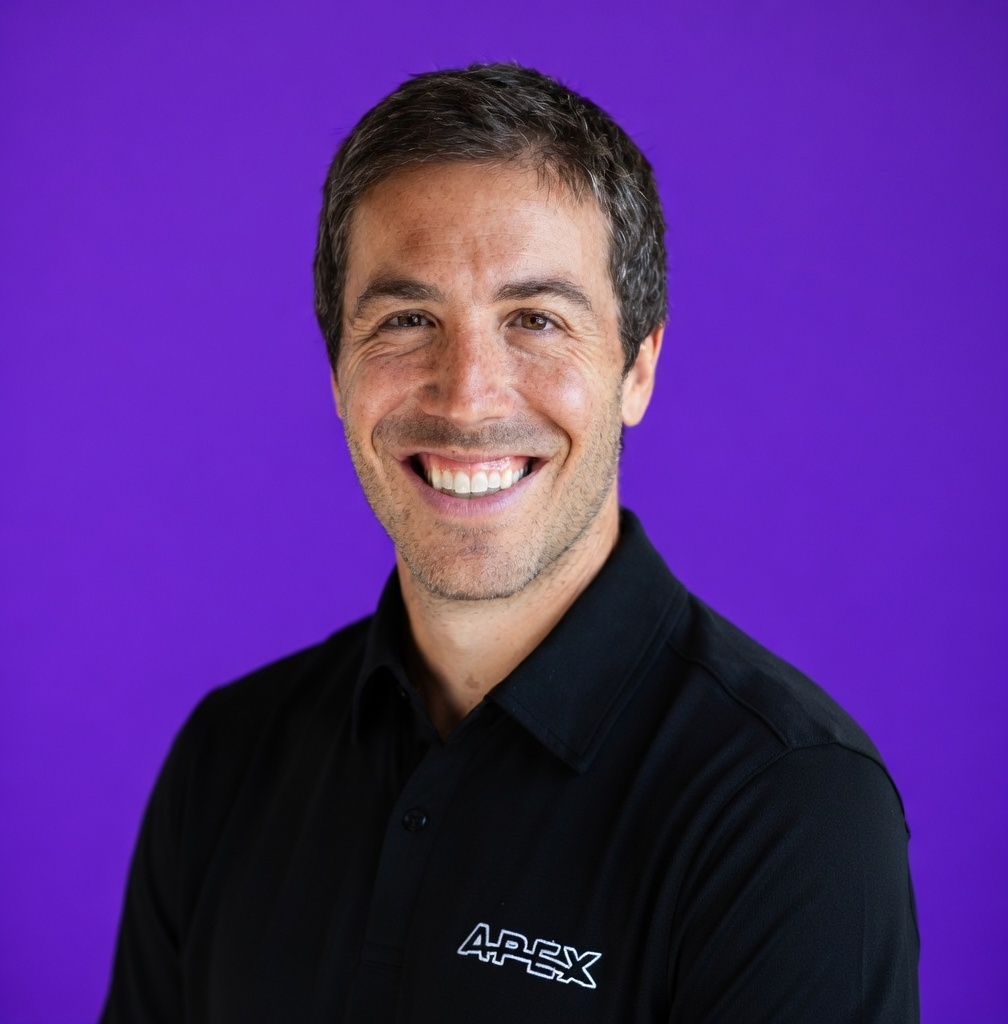
Ian Cinnamon
Advisor to Investment Committee
Ian Cinnamon is the CEO and Co-Founder of Apex, a high-rate configurable satellite bus platform manufacturer named one of Fast Company’s Most Innovative Companies of 2025. Backed by over $500 million from the world’s best investors, Apex’s first satellite bus set a world record as the fastest cleansheet design to production spacecraft operating in space.
Focused on meeting the needs of the rapidly expanding space industry and advancing critical national security missions like Golden Dome, Apex provides scalable platforms to both the commercial and government sectors. Apex’s Los Angeles production facility can deliver satellite buses to customers in weeks rather than the industry standard of months or years, with the capacity to produce over 200 buses per year at full scale.
Prior to his work with Apex, Ian founded Synapse, a company specializing in artificial intelligence for security and defense. Ian led the company through acquisition by Palantir. Earlier in his career, Ian co-founded Superlabs, which was sold to Zynga, where he served as Director of Product after the acquisition.
Ian is a Forbes “30 Under 30” honoree and an alumnus of Y Combinator. He received his B.S. from MIT and his MBA from the Stanford Graduate School of Business.
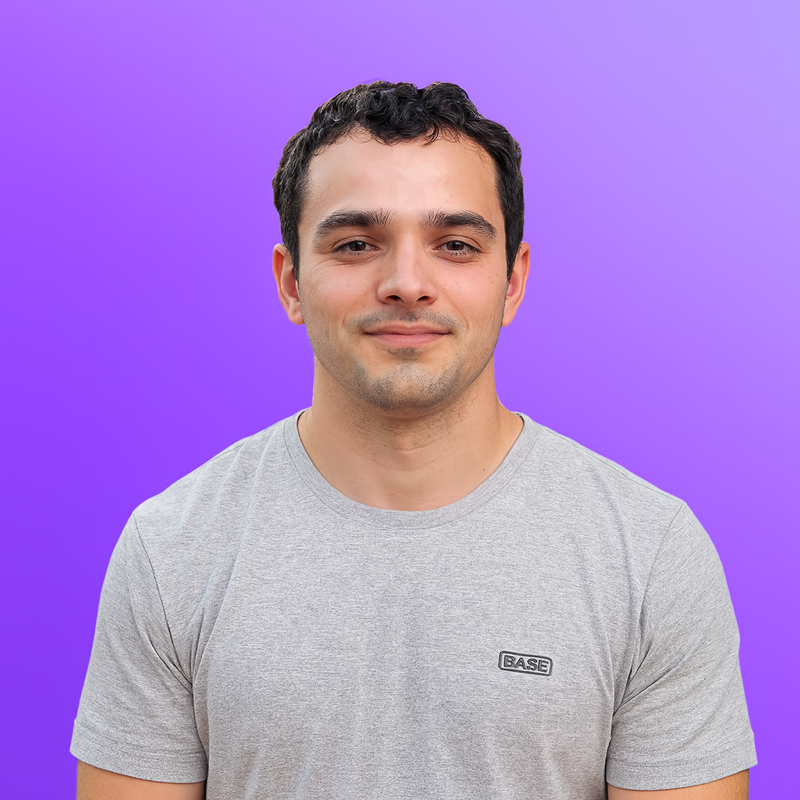
Justin Lopas
Advisor to Investment Committee
Justin Lopas is the Co-Founder and Chief Operating Officer of Base Power, an energy technology company based in Austin, Texas, focused on modernizing and decentralizing the electrical grid through home battery systems. Before founding Base Power in 2023, he led manufacturing at Anduril Industries and worked at SpaceX, where he played a key role in building the Starship program and establishing the Starbase site in Texas.
At Anduril, he managed a team of over 150 people overseeing manufacturing, operations, and supply chain for advanced defense systems. Known for his precision-building mindset learned at SpaceX, Lopas now applies those principles to scalable energy infrastructure, helping transform battery storage into intelligent grid technology.
A graduate of the University of Michigan with a degree in mechanical engineering, Lopas has also held positions at Apple and Baker Hughes.
Jon McNeill
Co-Founder

Jon currently serves as the CEO and Co-Founder of the venture studio, DVx Ventures. With a track record of founding and scaling six companies, Jon has led teams that generated tens of thousands of jobs and delivered multi-billion dollar returns for investors. At DVx, Jon and his team have launched 13 companies that are attacking broad opportunities in large markets.
Previously, Jon served as President at Tesla, where revenue grew from $2B to $20B in just 30 months. Subsequently, Jon joined Lyft as COO, where he played a pivotal role in doubling revenues and helping to take the company public. With a history as a six-time serial entrepreneur creating unicorns, Jon has a wealth of experience in operating and scaling companies during periods of hyper-growth in revenue and operations and has delivered returns of 9x to investors.
Jon currently holds advisory partner positions at Advent International and Goodwater Capital, serves as Vice Chair of the board of directors of Cruise, and is a board member for General Motors, Asurion, CrossFit, Stash, and Lululemon. During his tenure on the board of Lululemon, the company underwent a turnaround, resulting in a quintupling of its stock value.
Jon is a sought-after speaker, and frequently lectures at Harvard Business School and MIT Sloan School of Management. He graduated from Northwestern University before beginning his career at Bain & Company.
Robert Whitelaw
Chief Investment Strategist
Robert F. Whitelaw was most recently the Dean of the Undergraduate College, and continues to serve, as the Edward C. Johnson 3d Professor of Entrepreneurial Finance at the Leonard N. Stern School of Business, New York University.
Professor Whitelaw is best known for his comprehensive research on empirical asset pricing, including the resolution of the market-level risk-return puzzle, the role of information processing in explaining excess volatility, and the impact of frictions in generating apparent market inefficiency. His research also addresses the pricing and hedging of fixed income securities, and risk measurement and management.
His papers have been published in academic journals such as the Journal of Finance, the Journal of Financial Economics, and the Review of Financial Studies, as well as practitioner journals such as the Journal of Derivatives, the Journal of Fixed Income, Risk, and the Financial Analysts Journal. His research has received awards from organizations including Goldman Sachs Asset Management and the Chicago Quantitative Alliance. In addition, he is a Research Associate at the National Bureau of Economic Research (NBER), Program on Asset Pricing, and a past Associate Editor of the Review of Financial Studies and the Journal of Finance.
He has a PhD in Finance from Stanford University, Graduate School of Business and a BS in Mathematics from MIT. Professor Whitelaw teaches portfolio management, investments/capital markets and international finance in the MBA, undergraduate and executive programs and asset pricing at the doctoral level.
Adam Patti
Chief Executive Officer
Adam is a pioneer in the Exchange-Traded Funds industry. Prior to VistaShares, Adam founded IndexIQ with a vision to combine institutional quality alternative investment strategies with the power of ETFs to enhance portfolio construction for all investors. IndexIQ established itself as the leading alternative investment manager in the ETF industry and was acquired by New York Life Insurance Company in 2015.
As Chairman & CEO of IndexIQ, Adam was an architect behind IndexIQ’s award winning product line of alternative investment strategies, and post-acquisition worked to successfully integrate the firm into the New York Life Investments infrastructure, including the roll-out of IndexIQ branded ETFs globally.
Prior to founding IndexIQ, Adam held a series of senior executive roles at TimeWarner, including at Fortune Magazine where he led Fortune Indexes, the creator of the first smart beta index. Fortune Indexes was an early entrant into the ETF industry, having launched the Fortune 500 ETF in partnership with State Street Global Advisors back in 2000.
Adam is frequently featured in the media and has won numerous awards as an expert in ETFs and alternative investments. He holds an MBA from Northwestern University – Kellogg School of Management with a triple major in Finance, Marketing and Entrepreneurship, and a B.S. in Finance from University at Albany.
David Fetherstonhaugh
Chief Investment Officer
David Fetherstonhaugh is the Chief Investment Officer overseeing both public and private markets. His investment approach draws on extensive experience in growth technology investing, with a particular focus on the companies and critical supply chains underpinning artificial intelligence, electrification, and other major technology shifts.
David is also a Partner at DVx Ventures, where he leads the firm’s investment strategy and diligence across new ventures and private investments. Previously, he was a member of the investment team at Mithril Capital Management, the growth technology investment firm co-founded by Peter Thiel. At Mithril, he evaluated investments across sectors and stages, supported portfolio companies including Palantir, Auris, and BlackSky on financing and M&A, and contributed to investments in GreyOrange and Oklo.
David is a frequent commentator on technology and financial markets, with appearances on Bloomberg, Schwab, and industry podcasts. His perspectives have been featured in WSJ, CNN, Axios, Barron’s, MarketWatch, and other leading publications.
David began his career in investment banking at BMO Capital Markets and graduated from McGill University.
- Inception Date
- July 15, 2026
- Expense Ratio
- 0.75%
- Net Assets
- $2,501,149.65
- Fact Sheet
- GALX Fact Sheet
- Ticker
- GALX
- CUSIP
- 88635U507
- Primary Exchange
- NYSE
- Shares Outstanding
- 130,000
- Total positions (incl. options and cash)
- 61
- Premium/Discount
- 0.58%
- 30-Day Median Bid-Ask Spread
- 0.43%
Median 30 Day Spread is a calculation of Fund’s median bid-ask spread, expressed as a percentage rounded to the nearest hundredth, computed by: identifying the Fund’s national best bid and national best offer as of the end of each 10 second interval during each trading day of the last 30 calendar days; dividing the difference between each such bid and offer by the midpoint of the national best bid and national best offer; and identifying the median of those values.
There is no guarantee of how the Fund will perform in the future. There is no assurance the Fund will make a distribution in any given month and the following may vary greatly.
- 30-Day SEC Yield
- -0.34%
- Distribution Frequency
- Annually
The 30-Day SEC Yield represents net investment income earned by the Fund over the 30-day period ended on the date indicated by the Yield, expressed as an annual percentage rate based on the Fund’s share price at the end of the 30-day period. The unsubsidized 30-Day SEC Yield does not reflect any fee waivers/reimbursements/limits in effect.

Harness the power of Pure Exposure™
As of November 23, 2026, GALX, the VistaShares Space Supercycle® ETF, is an actively managed space infrastructure ETF with 61 holdings, investing in companies that build, launch and operate satellites, launch systems and ground networks.
Fund Specific Disclosure
Space Investing Risks. The Fund invests in companies that derive a substantial portion of their revenues or operating activities from space-related technologies and services and, as a result, is subject to risks associated with companies engaged in the space industry and the broader space economy, which may cause the Fund’s investments to be more volatile than those of more diversified funds. Companies involved in the design, manufacture, or launch of spacecraft, launch vehicles, or related systems face significant risks associated with launch failures, deployment malfunctions, mission delays, and cost overruns; space launches are inherently complex and costly, and failures may result in the total loss of spacecraft or payloads, substantial financial losses, reputational harm, increased regulatory scrutiny, and adverse impacts on a company’s financial condition and stock price. Space-related businesses often rely on advanced, emerging, or unproven technologies and may be adversely affected by rapid technological change, engineering challenges, design flaws, the inability to achieve expected performance, or competitors’ development of superior or lower-cost technologies. The space industry is subject to extensive domestic and international regulation (including licensing requirements, export controls, national security restrictions, environmental regulation, and orbital debris mitigation standards), and changes in laws, regulations, or regulatory interpretations may increase compliance costs, delay operations, restrict market access, or limit the deployment or operation of space-based systems. Many space-focused companies depend on governmental or quasi-governmental customers and contracts, and reductions in government budgets, policy changes, contract terminations, delays, or failures to renew contracts could materially and adversely affect revenues and financial performance. Space-based operations are exposed to risks arising from orbital debris, collisions, congestion in Earth’s orbits, and space weather (including solar activity), any of which may damage satellites or spacecraft and result in service disruptions, data loss, reduced operational lifespans, or complete mission failure. The space economy is evolving, and many companies may have limited operating histories, depend on a narrow set of products or services, or rely on a small number of customers or missions for a substantial portion of revenues; delays in commercialization or failure to achieve anticipated adoption of space-based services may adversely affect profitability and valuations.
Equity Market Risk. Common stocks are generally exposed to greater risk than other types of securities, such as preferred stock and debt obligations, because common stockholders generally have inferior rights to receive payment from specific issuers. The equity securities held in the Fund’s portfolio may experience sudden, unpredictable drops in value or long periods of decline in value.
Economic and Market Risk. Economies and financial markets throughout the world are becoming increasingly interconnected, which increases the likelihood that events or conditions in one country or region will adversely impact markets or issuers in other countries or regions. Securities in the Fund’s portfolio may underperform in comparison to securities in the general financial markets, a particular financial market, or other asset classes, due to a number of factors, including inflation (or expectations for inflation), deflation (or expectations for deflation), interest rates, global demand for particular products or resources, market instability, financial system instability, debt crises and downgrades, embargoes, tariffs, sanctions and other trade barriers, regulatory events, other governmental trade or market control programs and related geopolitical events.
Concentration Risk. To the extent that the Fund concentrates in an industry, it will be subject to the risk that economic, political, or other conditions that have a negative effect on that industry will negatively impact the Fund to a greater extent than if its assets were invested in a wider variety of industries.
Foreign Securities Risk. Investments in securities or other instruments of non-U.S. issuers involve certain risks not involved in domestic investments and may experience more rapid and extreme changes in value than investments in securities of U.S. companies. Financial markets in foreign countries often are not as developed, efficient, or liquid as financial markets in the United States, and therefore, the prices of non-U.S. securities and instruments can be more volatile. In addition, the Fund will be subject to risks associated with adverse political and economic developments in foreign countries, which may include the imposition of economic sanctions.
IPO Risk. The Fund may purchase securities of companies that are offered in an IPO. The risk exists that the market value of IPO shares will fluctuate considerably due to factors such as the absence of a prior public market, unseasoned trading, the small number of shares available for trading and limited information about the issuer. When the Fund’s asset base is small, a significant portion of the Fund’s performance could be attributable to investments in IPOs, because such investments would have a magnified impact on the Fund.
Newer Sub-Adviser Risk. VistaShares is a recently formed entity and has limited experience with managing an exchange-traded fund, which may limit the Sub-Adviser’s effectiveness.
 English
 한국어